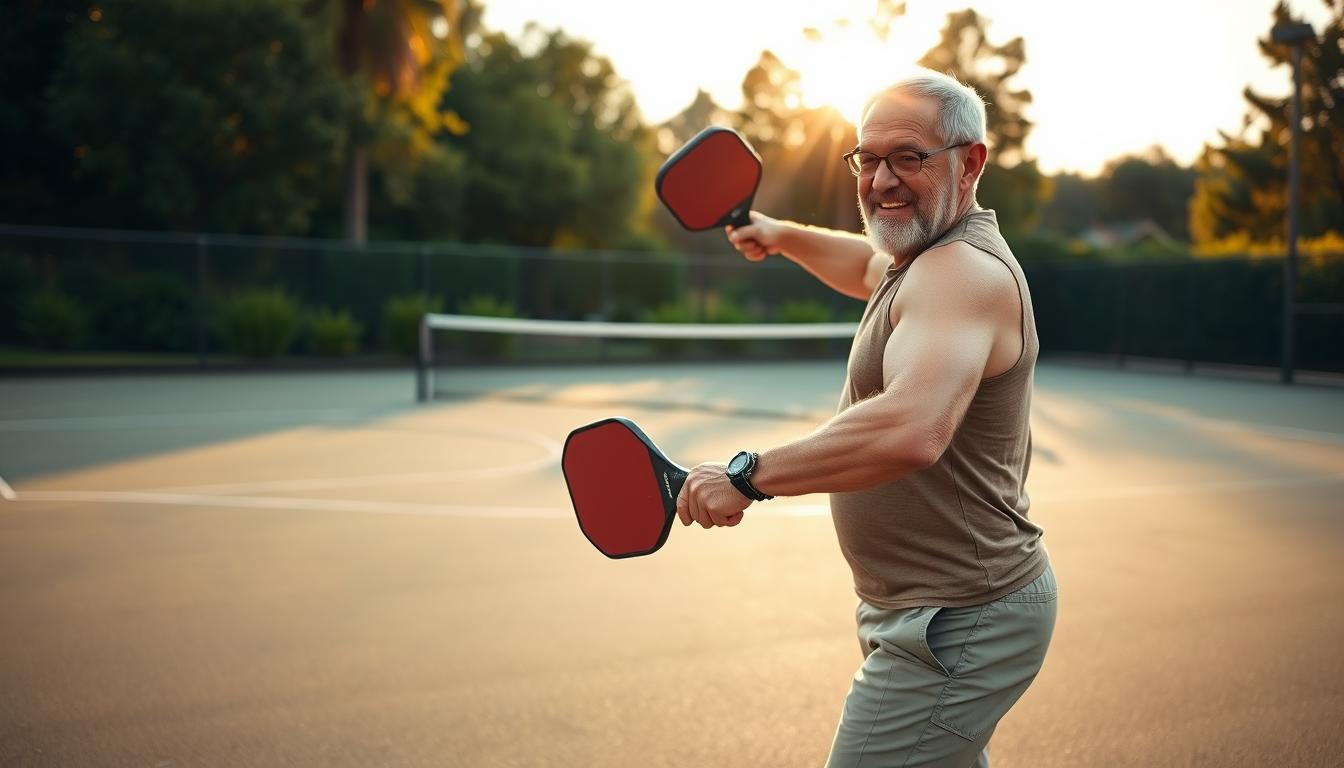
Can a simple warm-up and the right gear keep you playing confidently for years?
This brief guide shows how targeted training, on-court habits, and plant-based fueling help protect your shoulder while boosting performance in this fast-growing sport.
Your shoulder is highly mobile, which lets you serve, dink, and smash. That mobility also raises risk when you use abrupt rotation or overextend your arm.
Expect mild soreness or DOMS a day or two after play as you adapt. Learn to tell normal post-match tiredness from sharp pain or symptoms that worsen with time.
The plan ahead is simple: 10–15 minutes of dynamic warm-up, 2–3 short strength and mobility sessions per week, paced court time, lighter paddles, and planned recovery days.
Read on to build strength, reduce injuries, and keep enjoying the sport with sensible steps you can apply today.
Why shoulder health matters in pickleball for players over 50
Age and past problems change how the joint responds to repeated play. Small declines in tissue resilience make quick swings and reach more likely to cause irritation or flare-ups in the rotator cuff.
Understanding the demands of dinks, serves, and overhead shots
Dinks and most serves stay at or below shoulder height, yet sudden direction changes and occasional overhead shots place high loads on the joint. The rotator cuff stabilizes the socket during varied movements and must handle repeated accelerations.
How age-related changes and past injuries influence risk
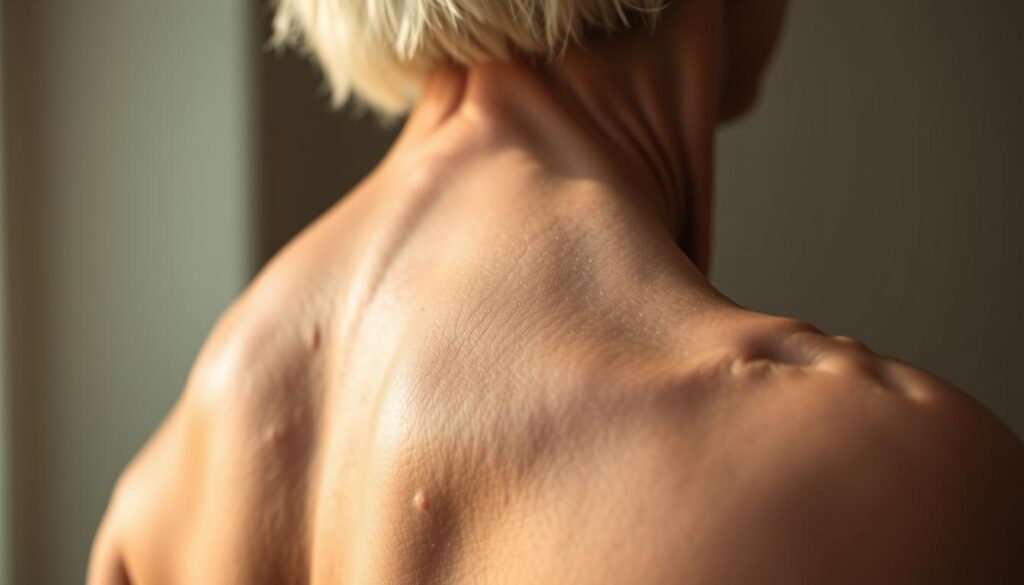
With time, connective tissue heals slower and recovery windows widen. Past impingement, instability, or bursitis can resurface when volume or paddle weight grows. Early pain during specific shots suggests you should reduce volume, tweak mechanics, and add targeted strengthening.
| Shot type | Rotator cuff demand | Common causes of pain | Simple prevention |
|---|---|---|---|
| Dink | Low-moderate | Repetition, poor posture | Short warm-up, scapular work |
| Serve | Moderate | Abrupt rotation, weak stabilizers | Technique focus, light paddle |
| Overhead | High | End-range stress, past tears | Limit reach, trunk drive |
Pickleball vegan over 50 shoulder care: what to watch for on and off the court
Not all aches mean a serious problem; knowing common triggers helps you act early and avoid downtime.
Common causes of shoulder pain
Overuse and repetitive motion top the list. Long social games or back-to-back sessions raise the risk of soft-tissue irritation.
Equipment matters. A paddle that feels only slightly heavy can tire the forearm and elbow, which increases load up the chain to the rotator cuff and arm.
Other causes include poor warm-up, deconditioned stabilizers, past injuries, impingement, arthritis, and bursitis. These amplify small stresses into lasting injuries.
Red flags vs. normal soreness
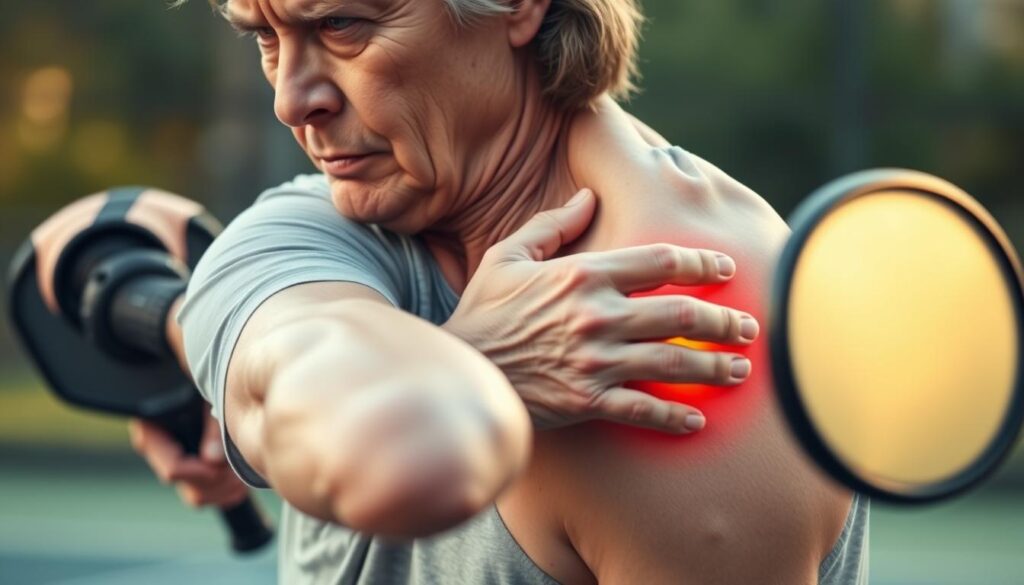
Normal soreness is a dull ache or DOMS that appears within hours or a day and eases in a few days. That level of soreness rarely limits basic arm use.
Watch for red flags: sharp or shooting pain with abrupt or overhead motion, swelling or bruising after a fall, inability to lift the arm, or soreness that lasts more than two hours after play.
“If pain is severe, worsening, or comes with chest tightness or dizziness, seek urgent evaluation.”
| Symptom | Likely cause | Action |
|---|---|---|
| Dull ache after play | DOMS, mild overload | Rest, gentle stretching, monitor |
| Forearm/elbow fatigue | Heavy paddle, grip tension | Try lighter paddle, adjust grip |
| Sharp pain with overhead moves | Impingement, rotator strain | Stop, modify play, seek professional advice |
| Swelling or bruising | Acute trauma | Pause play, medical check |
Track patterns of pain pickleball: note what shot, game count, and how long before symptoms start. When in doubt, reduce session length, swap gear, and prioritize gradual progressions to protect long-term play.
Warm-up first: a 10-15 minute routine to reduce strain
Spend 10–15 minutes on dynamic routines to wake up the joint, increase blood flow, and reduce risk before play. A brief intro readies muscles, tendons, and the rotator cuff for quicker, safer motion.
Dynamic mobility for rotator cuff and shoulder blades
Start with gentle arm circles, thoracic twists, and open-book rotations to free the upper back. These movements improve scapular motion and reduce compensations during overhead swings.
Activation drills: band pull-aparts, isometrics, and open book rotations
Use band pull-aparts to cue scapular retraction and rotator cuff activation. Add isometric external and internal rotation holds near neutral to wake up stabilizers without provoking pain.
“Low-rep activation beats fatigue — prime for control, not exhaustion.”
Breathing and posture prep to support overhead movements
Finish with diaphragmatic breathing and gentle cross-arm stretches to relax neck accessory muscles. Progress from slow mobility into rehearsal swings to bridge warm-up into match intensity.
| Drill | Goal | Timing |
|---|---|---|
| Band Pull-Aparts | Scapular retraction | 2 sets of 10–15 |
| Isometric Rotations | Cuff activation | 3 × 10–15s holds |
| Open Book | Thoracic mobility | 8–10 reps each side |
Build resilient shoulders: step-by-step strengthening you can do at home
A short program focused on control, symmetry, and slow progress will strengthen the joint and supporting muscles without provoking pain.
Postural chain: Supermans for scapular control and stability
Lie prone with arms extended and neck neutral. Lift arms and legs slowly and hold about 10 seconds. Repeat 3 times.
This connects the shoulder blades to the mid-back and glutes, improving posture and load transfer.
Lateral raises with holds to target deltoids without neck strain
Use a light weight. Lift one arm to shoulder height and hold for 5 seconds, 5 reps. Then do a 4‑second hold with 4 reps, etc.
Keep the neck relaxed and train both sides evenly to build strength and balance.
Mini-band shoulder circles to train small stabilizers
From hands-and-knees, band around wrists, palms down. Make small circles: 10 clockwise, 10 counterclockwise each side.
Keep a flat back and strong core to isolate rotator control.
Resistance-band patterns to support backhand and overhead shots
Anchor a band. Start in external rotation, lift the hand above shoulder height without pinching, then return and internally rotate. Do 10 reps per arm and adjust tension for challenge.
“Progress slowly and stop before a pinch — better to reduce load than chase quick gains.”
| Exercise | Primary target | Sets / Reps |
|---|---|---|
| Supermans | Scapular stabilizers, mid-back | 3 × 10s holds |
| Single-arm lateral raises (holds) | Deltoid muscle | 3 ladders, 5→1 reps |
| Mini-band circles | Deep rotators, scapular control | 3 × 10 each direction |
| Resistance-band backhand | External rotator, coordination | 3 × 10 per arm |
Schedule 2–3 sessions weekly. Aim for 8–12 slow, quality reps or short holds to build tendon tolerance and improve performance. If pain rises, lower load and favor isometrics until symptoms ease.
On-court habits to reduce risk and improve performance
Simple in-match checks and gear tweaks help preserve the arm and overall movement.
Find your movement sweet spot by setting a target number of games and planned rests that match your current capacity. Do a quick body check between games: breathing, pain level, and energy. This helps you adapt pacing on the court and reduce risk of a late breakdown.
Refine technique to avoid abrupt rotation or extreme reach. Use smoother movements and share load with hips and trunk during serves and overhead setups. Early preparation and clean contact beat last-second lunges for both safety and performance.
Stay lightly active between matches with mini mobility and activation drills so tissues stay warm. Choose a lighter paddle with an ergonomic grip to cut grip tension and cumulative fatigue. Wear supportive footwear to stabilize footwork and limit upper-body compensation.
When playing pickleball several days in a row, plan shorter sessions and more frequent rests. Warm up and do a few rehearsal rallies each time you re-enter play to keep tissues responsive. Log how many games felt strong and when form failed, then adjust volume to stay in your reduce risk sweet spot.
Recovery that keeps you playing: rest days, relief, and gradual progressions
Planned recovery keeps you playing more days with fewer flare-ups. Allowing time for tissues to repair is as important as the drills you do on court.
Active recovery and scheduling rest between sessions
Schedule at least one full rest day after a heavy session. This helps tendons and surrounding tissues rebuild and lowers the chance of cumulative injuries.
Use low-impact activities like easy swimming or cycling to keep circulation without stressing the joint. Short mobility routines and 5 minutes of breathing after matches speed the shift from effort to calm.
Ice, heat, massage, and taping: what helps and when
Choose ice when swelling or sharp pain appears soon after play. Ice can blunt soreness and reduce inflammation.
Use heat before gentle exercises to loosen tight muscles and improve blood flow. Gentle self-massage or a therapist session can reduce guarding and give short-term pain relief.
Elastic taping may add stability and awareness during play or help settle symptoms afterward. If a flare occurs, scale back volume first, then reload slowly with isometrics and controlled ranges.
“Track time between sessions and note which relief methods work best for your body.”
- Plan recovery days to protect tendons and tissues.
- Active recovery: swimming or easy cycling to maintain circulation.
- Ice early for swelling; heat before light exercises to warm tight areas.
- Massage and taping can reduce guarding and aid movement quality.
- See a physical therapist if injuries persist or progressions stall.
| Strategy | When to use | Benefit |
|---|---|---|
| Full rest day | After long or intense play | Allows tendon repair and reduces fatigue |
| Active recovery | Between match days | Maintains circulation without overload |
| Ice vs. heat | Ice: early swelling; Heat: pre-exercise | Reduces inflammation / increases blood flow |
| Massage & taping | During flare or for maintenance | Reduces guarding; adds stability and pain relief |
| Therapist/telehealth | Persistent or worsening pain | Individualized progressions and safe return plan |
Plant-based fueling for tendon and muscle health after 50
Smart meal timing and targeted plant proteins speed repair and help you feel stronger between sessions.
Aim for about 20–30 g of protein at each meal, focusing on high-leucine sources like tofu, tempeh, lentils, and blended plant powders. Spreading intake across the day helps tendons remodel and builds muscle strength without excess calories.
Pair iron-rich beans or spinach with vitamin C from citrus or peppers to boost absorption. A small protein-plus-carb snack within an hour of play supports recovery and primes the rotator cuff and arm for the next block of exercises.
Key nutrients to watch
- Protein & leucine: tofu, tempeh, legumes, and blends for muscle repair and strength.
- Omega-3s (algae DHA/EPA): reduce inflammation and support tendon health.
- Vitamin D, calcium, B12: protect bone health and overall performance.
- Hydration and iron pairing: support energy for court activities and drills.
| Nutrient | Plant sources | When to use |
|---|---|---|
| Protein + Leucine | Tofu, tempeh, lentils, protein blends | Main meals and post-play snack |
| Omega-3 (DHA/EPA) | Algae oil supplements | Daily for inflammation control |
| Vitamin D & Calcium | Fortified milks, leafy greens, supplements | Daily, especially in low sun exposure |
| B12 & Iron pairing | Fortified foods; iron + vitamin C | With meals to sustain energy |
“Coordinate nutrition with rotator cuff training days to maximize adaptation and reduce pain.”
Track how you feel over time when you adjust protein timing or add omega-3s. If needed, consult a registered dietitian to tailor micronutrient strategies while staying fully plant-based and focused on long-term health and performance.
Conclusion
Small, consistent actions on and off court add up to major gains in durability and performance. Prioritize a 10–15 minute warm-up and steady strength work to keep your shoulder resilient through frequent play.
Watch normal soreness versus sharp pain. If pain or unusual arm or elbow symptoms appear, cut volume and reassess technique to prevent minor issues from becoming lasting injuries.
Use smooth, whole‑body motion to limit strain and focus on rotator cuff and scapular strengthening exercises. Choose lighter gear and supportive footwear to reduce fatigue while maintaining performance.
Respect recovery with sleep, brief mobility, and spot treatments like ice or heat. Plan progressions, track symptoms, and get help early to protect tendons and enjoy the sport long term.