Can a smart, plant-forward plan keep you quick, strong, and sharp on court after 50?
Older players benefit when diet matches match-day demands. Thoughtful timing of carbs, steady protein, and quality fats helps sustain energy and supports quick recovery. A clear plan reduces gut trouble and sharpens focus during long rallies.
Targeted protein from soy, legumes, grains, nuts, and seeds preserves lean mass and aids repair after training. Low‑GI choices the night before and 1–4 g/kg carbs a few hours pre-match set steady blood sugar. Keep hydration and electrolytes reliable to avoid late-match fade.
Micronutrients matter: B12, iron, zinc, calcium, vitamin D, iodine, and omega‑3s are priorities for older athletes and are often met with fortified food or supplements. Evidence-backed aids like creatine and beetroot nitrate can boost repeat efforts and endurance when used safely.
This article will define plant-based vs. vegan approaches, outline needs assessment, and map a simple timeline from the night before to the opening serve so you arrive ready to perform.
Why pre-match fueling matters more after 50 for pickleball performance
After 50, small changes to what you eat before court can have outsized effects on stamina and sharpness. Age reduces muscle protein synthesis and shrinks glycogen stores, so recovery and power decline without clear planning.
A thoughtful plant-forward diet rich in carbs, fiber, and antioxidants can cut inflammation and ease joint discomfort. That helps perceived effort and steadier endurance during long rallies.
Higher satiety from whole foods raises the risk of under-eating. Track intake during busy days to protect overall calories and training quality.

| Focus | Benefit | When to act |
|---|---|---|
| Carbohydrate topping | Improves glycogen and footwork | 1–4 hours before play (1–4 g/kg) |
| Low‑GI choices | Stable blood sugar and decision-making | Night before and hours pre-match |
| Protein + electrolytes | Muscle maintenance and hydration | Daily and immediately around training |
Use on-court feedback to tune portions and timing. Smart changes will boost energy, sharpen movement, and protect long-term performance and health.
Plant-based vs vegan: what it means for athletic performance
How you define a plant-forward approach can change energy, recovery, and long-term strength.
Some people follow a flexible plant-based diet that may include small amounts of animal foods. Others avoid all animal products under a strict vegan diet. That difference matters when planning sports nutrition for players over 50.
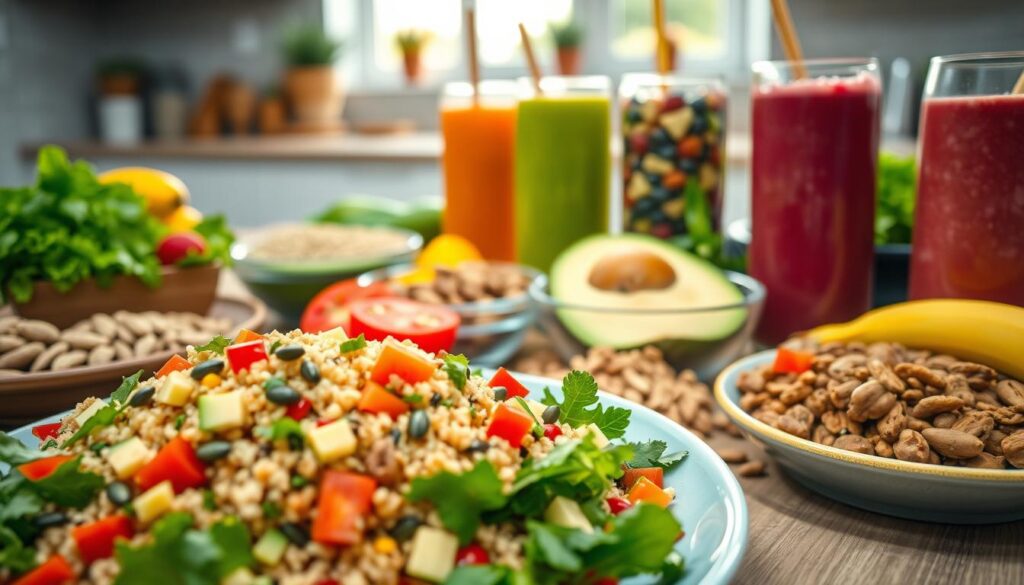
Whole-food plant patterns focus on legumes, whole grains, vegetables, fruits, nuts, and seeds. These foods supply steady carbs, fiber, and micronutrients that help sustain energy and support repair.
Whole-food choices and processed pitfalls
Minimally processed foods deliver protein, iron, calcium, and B12-fortified options when needed. In contrast, ultra-processed or low-protein vegan snacks can leave gaps in recovery and match stamina.
“Being animal-free doesn’t automatically equal performance; nutrient-aware planning does.”
Inflammation, recovery, and practical guidance
Fruits, vegetables, nuts, and legumes provide antioxidants and phytochemicals. These compounds may help temper exercise-induced inflammation and reduce soreness after hard sessions.
Research on vegan athletes is still limited, so apply standard sports nutrition: meet protein targets, prioritize iron and B12, and choose whole foods most of the time.
| Pattern | Strengths | Risks |
|---|---|---|
| Plant-based (flexible) | Higher dietary flexibility; easier to meet calories and protein | May include processed items unless planned |
| Vegan (strict) | Rich in antioxidants; consistent plant focus | Higher risk of low B12, iron, or protein without planning |
| Whole-food vegan | Best nutrient density; supports steady energy | Requires planning for fortified foods or supplements |
Assess your needs: energy, training load, and body composition goals
Start by matching daily calories to how often you play and how hard you train. A short audit of weekly sessions, match days, and rest days gives a clear base for planning.
Estimating calories without under‑fueling
Plant-forward foods often raise satiety and can mask low intake. Aim for carbs of roughly 4–12 g/kg/day depending on training volume. Keep fats near 0.5–1.5 g/kg and protein around 1.2–1.4 g/kg for endurance days.
Adjusting intake for weight management vs performance
If the goal is weight loss while keeping muscle, raise protein toward 1.8–2.7 g/kg and reduce calories slowly. Use short tracking periods, weekly weigh-ins, or simple performance markers to catch under‑fueling early.
- Match carb ranges to hard training vs light days to preserve glycogen.
- Boost calorie density with nut butter, avocado, olive oil, and dried fruit.
- Adjust portions by match length, heat, and weekly practice volume.
“Small, consistent tweaks to intake beat drastic changes that hurt court power.”
Build your fueling timeline: from the night before to the opening serve
A clear timeline for the night before and the final hour helps players arrive energized and comfortable on court. This simple plan protects glycogen stores, limits stomach trouble, and keeps focus during rallies.
The night-before dinner: glycogen priming with low‑GI carbs
Choose a dinner based on low‑GI carbohydrates and lean plant protein. Oats, long‑grain rice, pasta, or whole‑grain bread pair well with tofu, tempeh, or beans.
Keep fiber moderate if you are sensitive. The goal is full glycogen stores without GI distress the next day.
Four to one hours before: scale the 1–4 g/kg guideline
Many studies support 1–4 g/kg carbs 1–4 hours before exercise. Aim toward the lower end for early matches and higher for long, late matches.
| Timing | Carbohydrate target | Example foods | Notes |
|---|---|---|---|
| Night before | Moderate portion | Brown rice, pasta, oats + tofu | Low‑GI, moderate fiber |
| 4 hours | 1–2 g/kg | Whole‑grain sandwich, rice bowl | Balanced plate; avoid heavy fats |
| 2 hours | 0.5–1.5 g/kg | Oat porridge, pasta salad | Smaller portion if nervous stomach |
| 60–15 minutes | Small quick carbs | Banana halves, dates, small sports drink | Easy to digest; sip fluids |
Sixty to fifteen minutes: quick‑digest options and fluids
Choose a small, familiar snack in the last hour. Half a banana, a few dates, or a small carb drink works well without filling the stomach.
Include fluids and light electrolytes if warm or if the court has poor airflow. Practice this timeline on training days so it feels routine on match day.
Carbohydrates that last: low‑GI plant-based foods for steady energy
Choose low‑GI carbohydrates that release glucose slowly to keep legs quick through long rallies.
Low‑GI grains and starchy vegetables supply a steady glucose stream rather than sharp spikes. That helps sustain energy during long points and keeps focus on court.
Practical options include oats, long‑grain white or brown rice, pasta, baked potatoes, sweet potatoes, and yams. Portion guidance: ~1–1.5 cups cooked for larger players and ~0.5–1 cup for smaller players, adjusted by match length and sweat losses.
Legumes for tolerant athletes
Some legumes — chickpeas, lentils, butter beans, kidney beans, haricot beans, pinto beans, and black‑eyed beans — are low‑GI and add lasting carbs plus protein.
Use small servings of beans or lentils in earlier pre-match meals if you tolerate fiber well. Test these combinations on practice days to avoid GI surprises during competition.
- Prefer al dente pasta or slightly cooled then reheated rice and potatoes to lower GI and slow digestion.
- Swap for variety: sourdough or mixed‑grain breads, muesli, or long‑grain brown rice while keeping digestion predictable.
- Keep high‑fiber legumes earlier in the timeline and reduce portion size within two hours of play.
These choices make the diet predictable and reliable. Practice them in training so match day stays about tactics, not stomach issues.
Protein for muscle maintenance and recovery on a vegan diet
Protecting lean mass on court starts with a clear protein plan spread across the day. Masters players often need slightly higher amounts to preserve strength and speed during multi-match weekends.
Daily targets and timing for older endurance athletes
Aim for ~1.2–1.4 g/kg of protein on regular training days. During fat‑loss phases or heavy strength work, push toward 1.8–2.7 g/kg and favor the higher end if preserving muscle is the goal.
Spread intake across meals and snacks. Target roughly 20–40 g per eating occasion and include a dose within 30–60 minutes after play to support repair.
Complete amino acid coverage with legumes, soy, grains, nuts, and seeds
Combine legumes with grains and add nuts and seeds to cover essential amino acids. Soy foods—tofu, tempeh, edamame—and pea protein powders are reliable anchors for quality protein.
- Use tofu bowls, lentil pasta, or soy yogurt with oats for easy meals.
- Blend smoothies with soy milk or pea protein plus fruit for quick recovery.
- Remember plant proteins may need ~10% higher intakes due to digestibility.
Smart fats and fatty acids for cardiovascular support
Quality fats play a quiet but vital role in heart health and steady energy for older court players.
Focus on fat quality over quantity. Endurance athletes often aim for about 0.5–1.5 g/kg per day, roughly 30% of calories. That lets you add calories without large, heavy meals that slow movement.
Include avocado, walnuts, almonds, cashews, chia, flax, and pumpkin seeds across snacks, salads, and smoothies. These choices supply monounsaturated fats and stable calories for recovery and general health.
Omega‑3s: ALA, EPA and DHA
ALA comes from walnuts and flaxseed, but body conversion to DHA is low. Microalgae oil supplies preformed DHA and EPA without fish and is practical for older athletes who avoid animal sources.
Common guidance: aim for ~500–1000 mg combined DHA+EPA daily, with many supplements dosed so two to four capsules reach that range. Take microalgae capsules with a meal for better absorption and comfort.
| Food source | Key fats | Practical portion |
|---|---|---|
| Avocado | Monounsaturated fats | 1/2–1 medium per day |
| Walnuts & flax | ALA (omega‑3 acids) | 1 oz walnuts; 1 tbsp ground flax |
| Chia & pumpkin seeds | PUFAs, minerals | 1–2 tbsp per snack |
Micronutrients of concern for vegan athletes 50+
Micronutrient gaps can quietly undermine energy, strength, and recovery as players age. Older players following plant-forward diets should watch a short list of priorities to keep court-ready.
Key vitamins and minerals to track
- Vitamin B12 — critical for nerve function and energy; supplementation is usually required.
- Iron — low ferritin lowers endurance and raises fatigue risk; check labs and pair plant sources with vitamin C to boost absorption.
- Zinc — supports immunity and repair; include legumes, seeds, and whole grains.
- Calcium — preserves bone strength; fortified plant milk and yogurts help meet needs.
- Vitamin D — aids calcium use and muscle function; combine sun exposure with fortified milk or seasonal supplements.
- Iodine — needed for thyroid and energy; use iodized salt thoughtfully while watching blood pressure.
Practical steps and testing
Make B12 supplementation a standard part of the plan. Dose by product guidance and confirm with blood tests if unsure.
Order periodic labs for B12, 25‑OH vitamin D, iron/ferritin, and zinc. These results help tailor supplements and avoid excesses.
Fortified cereals and plant milks are efficient ways to add calcium and vitamin D. Pair iron-rich beans or spinach with citrus or peppers at meals to increase uptake.
Use iodized salt to secure iodine intake, but balance this with sodium goals. Regular testing lets you personalize the nutrient strategy and protect long-term health.
Evidence-backed ergogenic aids for plant-based pickleball players
A few well-chosen aids can boost repeat efforts and steady alertness during matches. These supplements complement good training and sensible nutrition to preserve power and endurance across multiple games.
Creatine monohydrate
Creatine supports short, repeated efforts and may improve glycogen stores, plasma volume, and ventilatory threshold. Many older players on plant-forward diets start from lower baseline creatine levels, so 3–5 g/day is a practical dose.
Expect modest initial water retention. Use consistent daily dosing rather than aggressive loading to avoid discomfort and to steady benefits for match-to-match performance.
Beta‑alanine
Beta‑alanine helps buffer muscle acidity during high‑intensity efforts longer than ~60 seconds. This can sustain quality points during long rallies and preserve sprint power late in a match.
Caffeine strategies
Caffeine improves alertness, central drive, and can spare glycogen for longer play. Aim for timing about 45–60 minutes before court time and adjust dose to individual sensitivity.
Avoid late-evening use if sleep is affected. Test timing in practice to find the sweet spot for your training and matches.
Beetroot nitrate
Beetroot juice or powder supplies dietary nitrates that can improve blood flow and muscular efficiency. Typical timing is ~60 minutes pre‑play; choose concentrated shots or measured powders per label directions.
“Test any supplement in training so match day is about tactics, not surprises.”
Try one change at a time, track how your muscles feel, and review effects on endurance and overall performance. Lab checks and a clinician’s input are wise for personalized safety and dosing.
Hydration and electrolytes tailored to match-day demands
Plan your fluids and electrolytes so energy and focus last through long matches. Good on-court performance starts with steady pre-hydration, sensible sodium, and quick carbs available when needed.
Pre-hydration and a morning sodium boost
Start the day with regular sips of water and a modest sodium source at breakfast. A pinch of iodized salt on toast or a savory oatmeal bowl helps retain fluids and reduces the need for large volumes later.
Courtside carbs and caffeine for mid-match support
Keep quick-digest carbs on hand: bananas, dates, or energy gels supply high-GI carbs that support endurance during long rallies. Use caffeine sparingly about 45–60 minutes before play to enhance alertness, but test timing in practice.
Practical hydration habits
Bring two labeled bottles: one with plain water and one with an electrolyte mix. Sip regularly between points and games instead of large gulps. Track weight before and after play and note urine color to adjust fluids and sodium if conditions are hot or humid.
“Avoid drinking only plain water for many hours; low-sodium sweat losses can make hyponatremia a real risk during extended play.”
| When | What to bring | Why it helps |
|---|---|---|
| Morning | Water + small salty breakfast | Improves fluid retention and readiness |
| Between matches | Electrolyte mix bottle + water | Maintains sodium balance and prevents cramping |
| During long rallies | Banana, dates, or gel | Quick glucose to stabilize blood sugar |
| 60–45 min pre-play | Caffeine as tolerated | Boosts alertness and perceived energy |
Practice these strategies on training days so meals and sipping plans feel routine. That reduces GI surprises and keeps match-day choices focused on tactics and court play.
Managing fiber and GI comfort on match day
On game day, simpler starches often keep the body steady and the head clear. High‑fiber diets offer many long‑term benefits, but close to play they can slow the stomach and trigger discomfort.
When to favor lower-fiber starches over legumes
Fiber slows gastric emptying and can leave you feeling heavy or bloated during fast movement. For matches within a few hours, lean toward gentle starches that digest quickly.
- Choose white rice, sourdough or white bread, plain pasta, or peeled potatoes in the last 1–4 hours.
- Some players tolerate small portions of chickpeas or lentils earlier in the day, but avoid beans close to play.
- Build a simple meal with a carb base and modest fat so fullness fades before the opening serve.
- Test tolerance on practice days to personalize what works during tournaments.
- After play, resume higher‑fiber, nutrient‑dense foods to support gut health and recovery.
“Practice your match‑day meals so your stomach is part of the routine, not the variable.”
Make sure your diet supports both comfort on court and long‑term nutrition off it.
Vegan pre-match fuel: build-your-plate templates
Simple, plated templates make match‑day decisions fast and reliable for players over 50.
Below are timed meal and snack ideas that balance carbs and protein while keeping fats and fiber modest close to play. Practice these combinations in training to find what your stomach tolerates.
Four‑hour, two‑hour, and thirty‑minute ideas
Four hours: long‑grain rice or oats with tofu or tempeh, roasted vegetables (lightly cooked), and a drizzle of olive oil for satiety. This meal tops glycogen without a heavy stomach.
Two hours: pasta with marinara and lentil crumbles if you tolerate fiber, or white rice with pan‑fried tofu and a small portion of cooked greens. Keep portions moderate.
Thirty minutes: a banana, a few dates, a small sports drink, or a light soy milk and fruit shake. Choose liquids if solids sit poorly.
Portable grab‑and‑go options
- Rice cakes with nut butter for quick carbs plus a modest protein hit.
- Bananas, dates, and single‑serve soy protein shakes for easy digestion.
- Trail mix with pumpkin seeds and a mix of dried fruit for tournament snacking.
- Shelf‑stable tofu, instant oats cups, microwavable rice, and applesauce pouches for convenience.
| Timing | Example plate | Why it works |
|---|---|---|
| 4 hours | Long‑grain rice, tofu/tempeh, roasted veg, olive oil | Low‑GI carbs + protein support steady energy |
| 2 hours | Pasta + marinara + lentil crumbles or white rice + tofu | Moderate carb load, lower fiber if sensitive |
| 30 minutes | Banana, dates, small sports drink, soy shake | Quick carbs; easy on the stomach |
| Portable | Rice cakes, nut butter, trail mix, single‑serve shakes | Simple, shelf‑stable choices for tournaments |
Training days vs match days: adjusting carbs, protein, and fat
Adjusting daily intake for training versus matches helps preserve speed, stamina, and body composition.
Use carbohydrate periodization: raise carbs on heavy training or match days and reduce them on light or recovery days. Aim toward the practical ranges used for older players so energy stays high when work is hard.
Keep protein steady every day to support repair. Aim for the typical endurance target and add slightly more when you’re trying to lose weight to protect muscle mass.
Keep fats steady from quality sources and adjust portions only enough to hit calorie goals. Avoid letting fats crowd out evening or hour-before carbs meant for sharp court work.
“Match your food to the session: more carbs for big days, consistent protein for repair, steady fats for health.”
| When | Carbs | Protein | Fat |
|---|---|---|---|
| Heavy training/match | Higher (toward upper range) | Daily target | Moderate, quality sources |
| Easy/recovery | Lower | Daily target | Small adjustment to meet calories |
| Weight-loss phase | Moderate | Slightly higher (to protect muscle) | Reduce modestly for calorie deficit |
Log a few representative days and compare energy and performance. Practice match-day routines in hard training so the plan works when it matters most.
Travel-ready fueling for tournaments and away courts
Tournament travel changes simple routines; packing smart food keeps performance steady on the road.
Cooler-friendly meals and quick prep
Pack pre-cooked long-grain rice, baked potatoes, tofu strips, soy yogurt cups, and cut fruit in a small cooler. These items are high-carb, low‑GI staples that digest predictably and can be mixed into simple meals.
Pair carbs with plant proteins when time allows to support recovery between matches. A tofu rice bowl or a potato with a scoop of lentil salad is easy to assemble at courtside or in a hotel room.
Shelf-stable backups and courtside options
- Instant oats, microwaveable rice pouches, canned beans or lentil soups, nut butter packets, and rice cakes for quick meals.
- Bananas, dates, applesauce pouches, and sports drink powders as portable, high-GI options for urgent carbs during long matches.
- Shelf-stable tofu, roasted chickpeas (test tolerance), and soy protein shakes provide compact protein when refrigeration is limited.
Bring electrolytes and a refillable bottle. Scout water access and ice availability before match time so you can sip and stay balanced.
Make sure hotel bookings include a fridge or microwave, and map nearby grocery stores for fast resupplies.
Common myths and mistakes to avoid with a vegan diet for sport
Many athletes assume plant-only menus guarantee optimal sports nutrition — that can be misleading.
“Junk‑food” approaches often look animal‑free but fail on key targets. Calories may be enough while protein and micronutrients lag.
- Myth: Animal-free equals optimal. Reality: planned diets matter; hit protein and key vitamins to perform.
- Soy and pea proteins work well. Use varied plant proteins to secure complete amino acids and recovery.
- Fortified plant milk can supply calcium and vitamin D—so dairy is not the only route to bone support.
- Avoid over-relying on ultra‑processed snacks that lack iron, zinc, and B12 despite looking convenient.
- Don’t ignore B12 and iodine; these nutrients need regular attention and, often, supplementation.
- Counter the belief that only meat or fish sustain strength: smart protein choices and timing support stamina and muscle.
“Careful planning, not food labels, determines whether a diet supports sport.”
Pay attention to labs and tailor supplements when needed. With the right mix of protein, fortified milk, and targeted checks, older players can keep strength and energy without animal reliance.
Safety first: medications, health conditions, and professional guidance
Health checks make dietary shifts safer for older players juggling meds, chronic issues, and intense weekends.
Before adding supplements like creatine, beta‑alanine, caffeine, or microalgae oil, consult your physician or a registered dietitian. They can review interactions and advise on timing that fits your meds and goals.
Some medications (for blood pressure, blood thinners, or mood disorders) change how electrolytes and caffeine act. Give these issues careful attention and get written guidance from a clinician.
- Order periodic labs to check key nutrients (B12, iron, vitamin D, ferritin, zinc) and tailor supplements safely.
- Introduce new foods or supplements gradually and test them on a practice day, not on match day.
- If you have GI conditions, personalize fiber and fat in meals to avoid discomfort on court.
- Seek professional input for complex histories common among masters‑age people.
“Use this guidance for education and confirm changes with a healthcare pro before you start supplements.”
Conclusion
Intentional choices across carbs, protein, fats, and tested supplements make performance more predictable for masters players.
A structured plant-based diet and simple timing give clear benefits for athletic performance. Low‑GI carbs before play and quick carbs during long sessions sustain energy and protect focus.
Hit protein targets across the day with combined plant sources to preserve muscle and speed recovery. Include quality fats and microalgae omega‑3s for cardiovascular support and resilience.
Evidence-backed aids like creatine, caffeine, and beetroot nitrate can help, but test them in training first. Monitor results, adjust the templates to your needs, and expect steady gains in endurance and on‑court athletic performance.