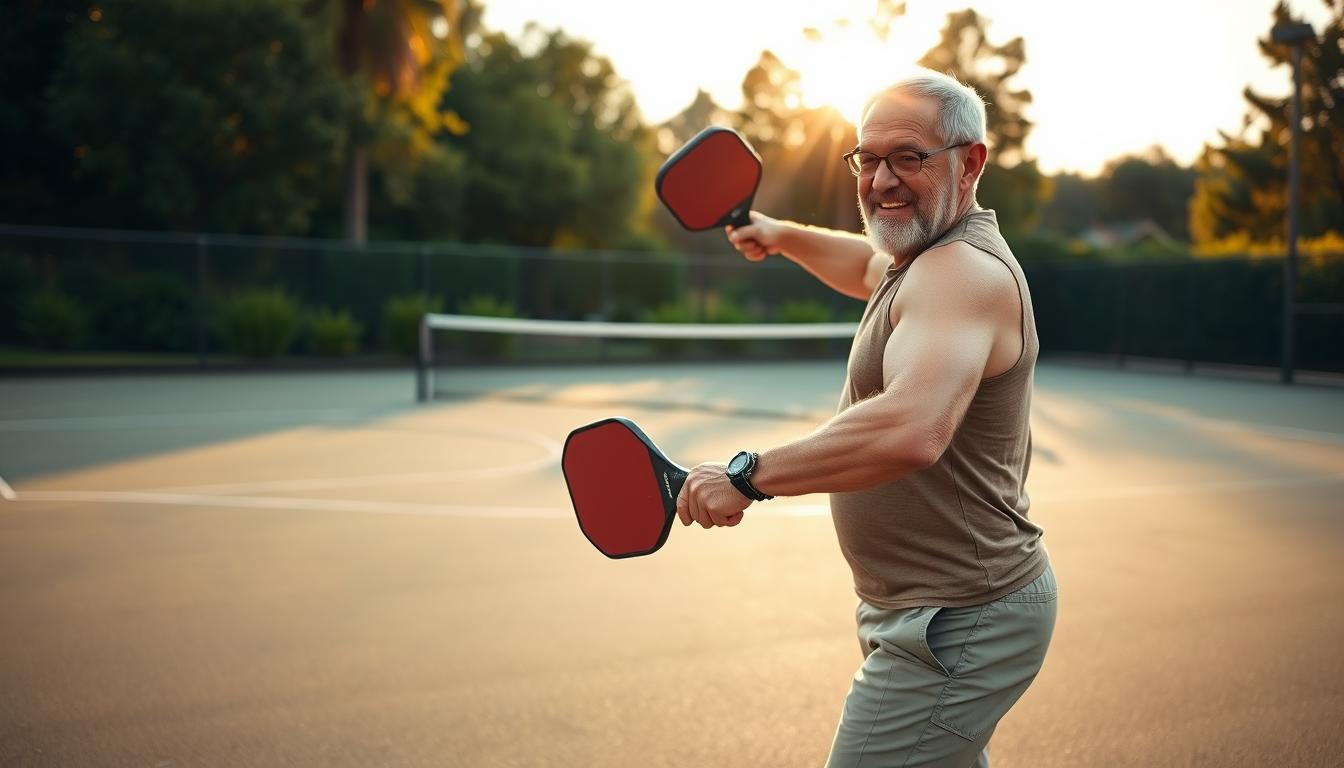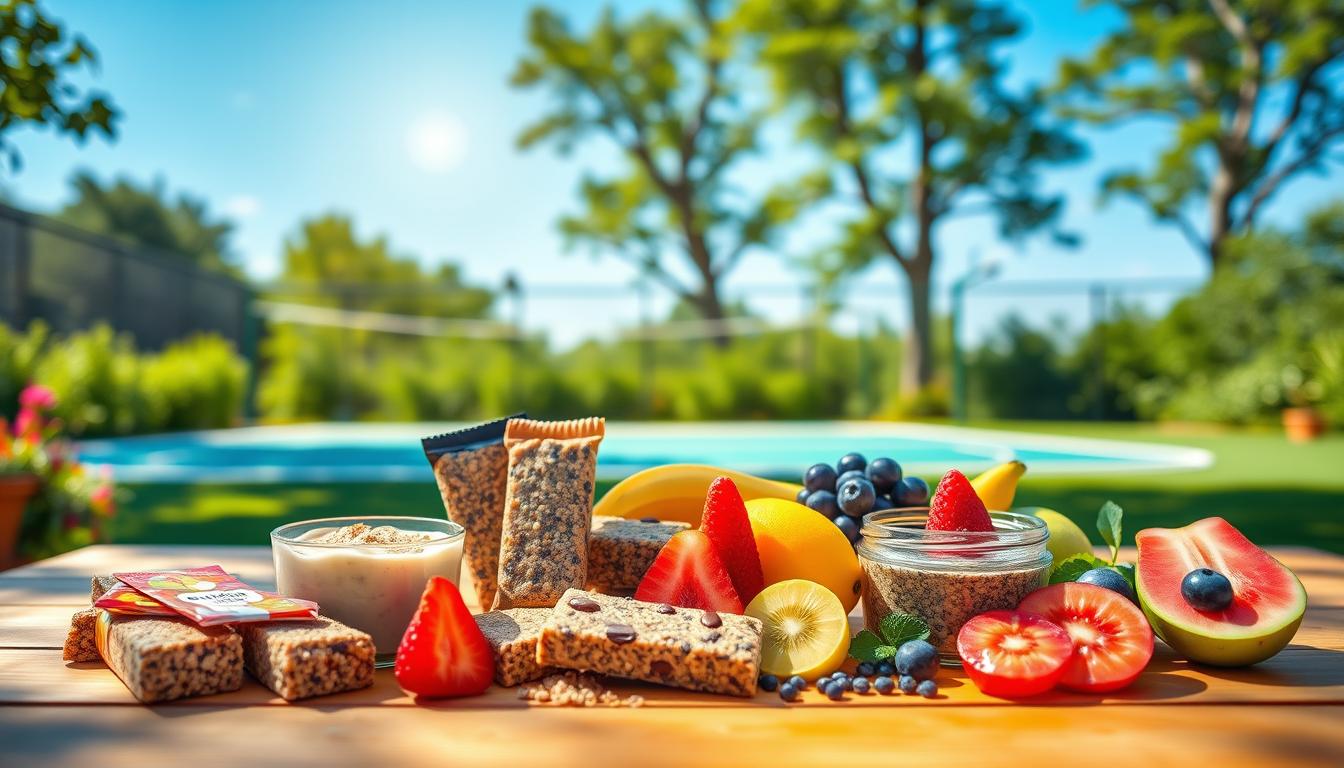
Can a few smart bites really sharpen your court stamina and keep energy steady all day?
This short guide targets active adults who want plant-based, modest-sweet options that fuel play and support long-term health. Expect a listicle of practical ideas, label-reading tips, and timing strategies to help you pick the right item before, during, and after matches.
We emphasize nutrient density: quality protein, fiber, and healthy fats to boost satiety and steady energy. You’ll see both homemade choices—nuts, seed mixes, chickpea bites, oats recipes—and vetted bars like ALOHA, GoMacro, No Cow, Misfits, and Clif Builders for grab-and-go convenience.
Hydration-friendly fruit, 70%+ dark chocolate, and simple electrolyte notes round out pre-play fueling without excess sweeteners. Read on for quick, court-ready suggestions that fit busy schedules and sensible nutrition goals.
Why Low-Sugar Vegan Snacks Matter for Pickleball Players Over 50
Small changes in what you eat can make a big difference in how you move and feel on court.
Low-GI carbohydrates and fiber slow glucose release. That steady release helps sustain energy and reduces mid-match crashes. Consistent fuel supports quick footwork and sharp reaction time during long rallies.
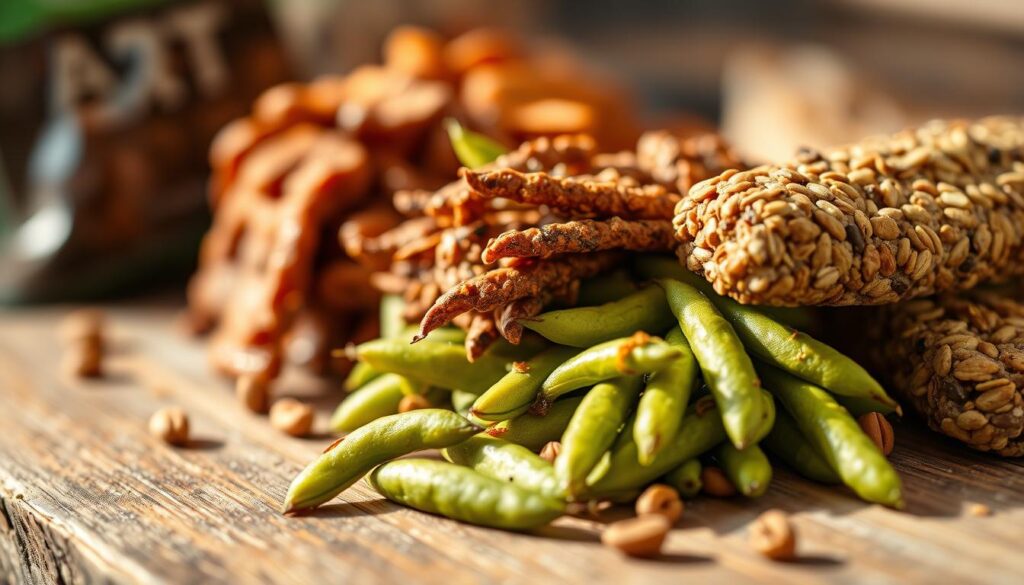
Sustained energy without the crash: fiber, protein, and low-GI carbs
Adequate protein from pea or brown rice powder, legumes, nuts, and seeds helps repair muscle and preserve lean mass as you age. Combining protein with oats or whole grains adds fiber that prolongs fullness and steady energy.
Joint, heart, and brain health benefits from nuts, seeds, and dark chocolate
Healthy fats in nuts and seeds support joint comfort and heart health. Small portions of 70%+ dark chocolate add polyphenols that may lower inflammation and boost mood without too much added sugar.
Hydration and electrolytes: fruit choices and when to skip sugary juice
Choose whole fruits like berries, apples, melon, or kiwi for water, fiber, and electrolytes. Save sugary juice for rare situations — whole fruit avoids sharp spikes and helps steady focus during multi-game sessions.
- Favor minimally processed foods and short ingredient lists to reduce GI distress.
- Time your food: pick the right item for the right window to keep steady energy and aid recovery.
Pickleball vegan over 50 low sugar snacks
Smart fuel choices help maintain endurance and focus on the court without heavy crashes.
Walnuts, almonds, chia, flax, pumpkin, and sunflower mix into a portable jar. Nuts and seeds add protein, healthy fats, minerals, and a pleasing texture. A small handful delivers quick calories and satiety between games.
Roasted chickpeas
“Roast at 450°F for 30–40 minutes with a drizzle of olive oil and spices for a crispy, high-fiber bite.”
Rice cakes with peanut butter and bananas
Top a thin layer of 100% peanut butter or a spoon of nut butter with banana slices. This combo balances carbs and protein for steady energy during longer sessions.
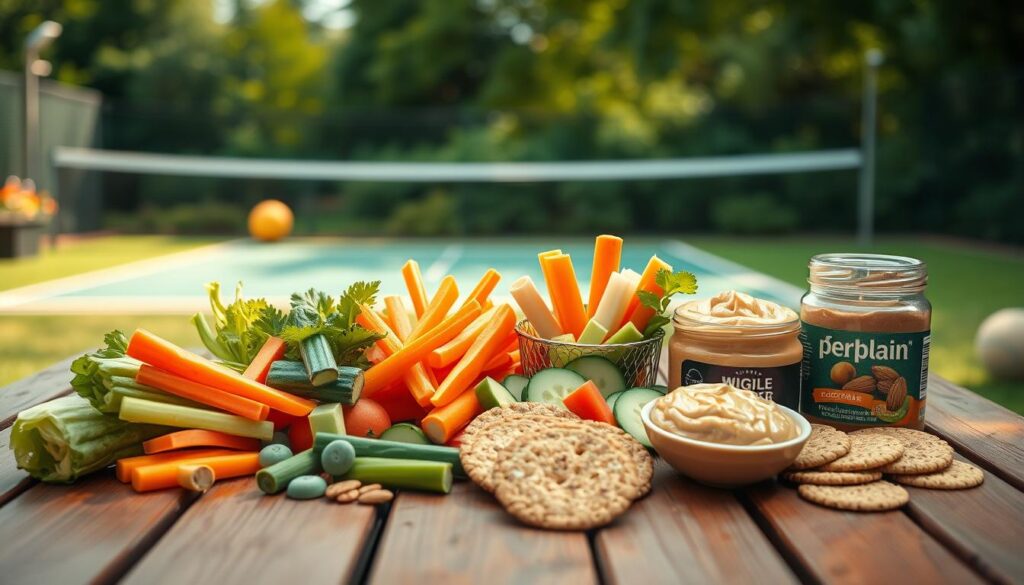
Hummus, veggies, and whole-grain crackers
Carrots, celery, and peppers pair with hummus for fiber and micronutrients. Add a few whole-grain crackers when you need extra carbs without excess sugar.
Overnight oats, bars, and homemade bites
Prep oats with cinnamon, a swirl of nut butter, and berries. Make DIY fruit-and-oat bars using dates or ripe bananas, or mix oats, flax, cocoa, and nut butter into bite-sized rounds.
Protein bars, yogurt, chia gel, and dark chocolate
Choose bars that list pea or brown rice protein first and under 5g added sweetener. Try higher-protein plant yogurts, chia pudding for slow-release fuel, and a small square of 70%+ dark chocolate to satisfy cravings without many calories.
Smart Label Reading and Ingredient Swaps for Lower Sugar
Knowing which ingredients to avoid makes it easy to pick wholesome, protein-forward foods on the go.
Scan labels for hidden sweeteners and highly processed items. Avoid additives such as maltodextrin, acesulfame K, and sucralose. These can affect energy and appetite even in tiny amounts.
Also watch for long lists of refined oils. Choose products that use oil sparingly or list whole-food fats instead.
What to look for
- Short ingredient lists that highlight pea or brown rice protein and whole grains.
- Fiber-rich grains, nuts, and seeds like pumpkin and sunflower for minerals and texture.
- Natural sweeteners such as dates used sparingly, paired with good protein and fat balance.
Simple swaps that work
- Choose 100% peanut butter or an unsweetened nut butter instead of sweet spreads.
- Pick whole fruit rather than juice for hydration and fiber.
- Replace candy with a square of 70% dark chocolate for a controlled treat.
- When buying bars, compare grams of sugar and the fiber-to-protein ratio; No Cow and Misfits show what low-sugar options can look like.
“Short ingredient lists and plant proteins tell you more than any marketing claim.”
Timing Your Snack Around Play for Energy and Recovery
Timing small bites around your session can keep energy steady and speed recovery.
Plan snack time based on how hard and long you will play that day. Aim to eat 60–120 minutes before activity when you can handle a fuller bite, and use lighter options in the final 30–45 minutes.
Pre-play ideas
Choose oats or a rice cake topped with a thin layer of nut butter like 100% peanut butter about an hour before. Add a banana if intensity will be high; the carbs provide slow-release fuel without heaviness.
Post-play recovery
Within 30–60 minutes after play, emphasize protein for repair. A higher-protein plant yogurt or a quality bar with pea or brown rice protein pairs well with berries or apple slices.
“Portable fruit, hummus and fruit-and-oat bars are practical options for on-the-go recovery.”
| When | Example snack | Why it works |
|---|---|---|
| 60–120 min pre | Oats bowl or rice cake + peanut butter | Slow carbs and some protein deliver steady energy |
| 30–45 min pre | Small fruit portion or vegan-style yogurt | Easy carbs that top up glycogen without GI issues |
| Post (30–60 min) | High-protein yogurt or plant bars | Protein-rich choice to aid muscle repair and recovery |
Conclusion
Finish your game day with simple, plant-forward bites that keep energy steady and recovery on track.
Choose snacks that blend fiber-rich carbs, quality protein, and healthy fats. Read labels for short ingredient lists and minimal added sugar so your food sits well before and after play.
Mix store-bought bars with pea or brown rice protein and batch-prepped recipes like roasted chickpeas or fruit-and-oat bites. Small pairings work: nuts and seeds with a square of dark chocolate, or fruit with a spoon of 100% peanut butter.
Rotate ideas to manage calories and avoid boredom. Test timing during practice and plan ahead—prep a few recipes, keep reliable bars on hand, and stock simple ingredients so smart choices are easy all day.