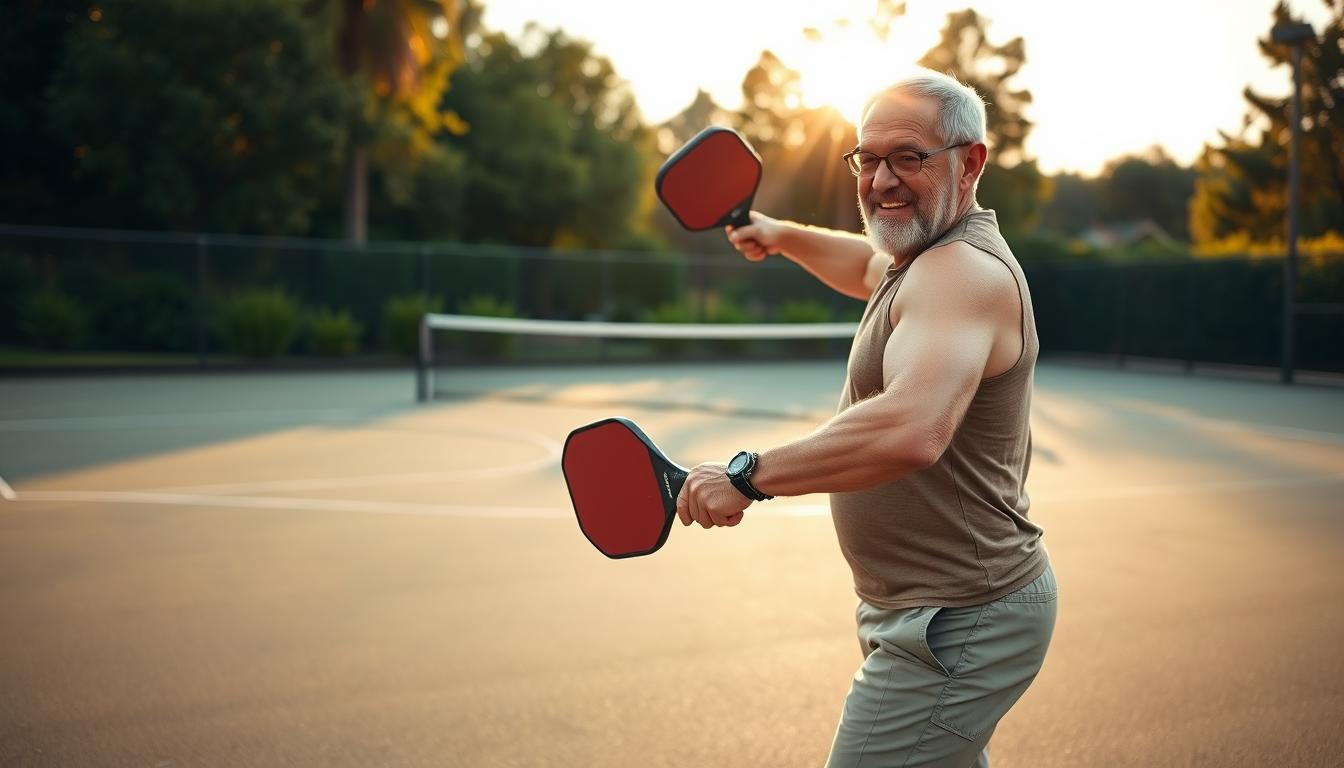
Can a smart, age-focused plan keep you sharp on the court and still protect your body?
This short guide shows how to build stamina, speed, and focus with safe, sport-specific methods. You will balance on-court play with off-court conditioning that mirrors the game’s stop-start rhythm.
Expect intervals that copy rally patterns, low-impact cardio for steady energy, and strength work that protects joints and boosts performance. Simple drills — rowing intervals, brief bike sprints, brisk walking, and focused strength sessions — translate directly to better court movement.
Safety is central: dynamic warm-ups, movement cues for knees and back, and sensible session frequency help avoid fatigue and injury. Nutrition and hydration tips will stress timed carbs, protein for repair, and electrolytes to steady energy.
Follow this weekly, scalable plan and you’ll finish matches feeling stronger, more consistent, and ready for the next point.
Why endurance matters for pickleball players over 50 right now
Rapid sprints, quick resets, and lateral dives define match rhythm and demand targeted stamina.

The stop-start demands and what it does to your body
Rallies last seconds, then players reset for the next point. That stop‑start flow taxes your heart and lungs differently than steady sports.
Short bursts of speed and fast recovery require both an aerobic base and interval work. One side of the court spans 22 feet baseline to net, and lateral coverage adds load, especially in singles.
Training intent: build stamina, speed, and focus without overdoing it
Combine 30–60 minute aerobic sessions with 20–30 minute high‑intensity intervals to mirror rallies and resets. Limit play to four sessions of 1–2 hours weekly to manage fatigue.
Hydrate with water and a pinch of electrolytes, prioritize sleep, and add strength work for mobility. Measured intensity gives you a performance edge by keeping shot quality high late in a match and sharpening tactical composure.
How to start safely: warm-up, movement prep, and intensity guidance
Start each session with a short, active warm-up that primes joints and sharpens balance.

Dynamic warm-ups for joints and balance before play
Spend 5–8 minutes on leg swings (front-to-back and side-to-side), arm circles, gentle lunges, lateral shuffles, and single-leg balance holds. These simple drills lubricate joints and wake key muscle groups.
Dynamic work helps balance and makes on-court movements feel smoother and more stable. It lowers the risk of sudden injuries by improving coordination.
Safe movement cues on court
Use athletic shuffles for short adjustments. Pivot and turn your hips and shoulders when you need to run forward. Never run backward; it raises the chance of falls and strains to the back or knees.
“Call a switch on lobs or quarter-turn and run instead of backpedaling to protect your spine and keep control.”
Reading your effort: heart rate, talk test, and session intensity
Check intensity with a simple rate awareness or the talk test. During moderate play you can chat; during high-intensity intervals full sentences are hard to form.
- Notice breathing rate and perceived exertion to stay in planned zones.
- Sip water with a pinch of electrolytes when it’s hot or you sweat heavily.
- Stop any drill that causes sharp pain and scale volume gradually to prevent overload.
Pickleball vegan over 50 endurance training methods that mirror match play
Smart, brief efforts with planned recovery mirror match rhythm and protect joints while building fitness.
Interval work should copy rallies: push hard for 30–60 seconds, then take equal or slightly longer easy recovery. This builds your ability to surge, recover, and repeat during a match.
Interval training essentials for rallies and resets
Use 30–60 second efforts with 30–90 second recoveries. Aim for 2–4 interval sets in a session and track total minutes so you can increase time safely.
Jogging and brisk walking targets to build aerobic base
Follow CDC-style guidance: target about 75 minutes of vigorous running or 150 minutes of brisk walking per week, spread across days. Split walks into 20–30 minute blocks if that fits your schedule.
Rowing intervals for full‑body stamina
Row 1 minute hard, 1 minute easy for 20 minutes at 20–24 strokes per minute. Make the “on” intervals clearly harder so your heart and muscles feel the difference.
Bodyweight HIIT and Tabata bike sprints
Try a bodyweight circuit once or twice weekly. Keep sets short and stop before form breaks down.
“Twenty seconds all-out and 10 seconds rest, repeated 8 times, takes four minutes but sharpens speed and power fast.”
Seasonal cross‑training options
Use cross-country skiing or ski machines in winter to keep the whole body engaged while giving joints a break from court time.
- Track minutes and time-in-zone across sessions to avoid hidden fatigue.
- Use brisk walking as a low-impact filler on non-court days.
Strength and stability to power movements, protect muscles, and prevent injuries
Adding focused strength work helps convert speed into controlled, repeatable movement on court.
Core, legs, and upper body that translate to court performance
Two to three sessions per week of resistance work preserve joint health and bone density. This reduces injury risk and gives players more agility during matches.
Key moves include push-ups, assisted pull-ups, dumbbell presses, rows, squats, deadlifts, lunges, and glute bridges. Pair those with planks, side planks, and controlled leg raises to build torso stability.
Programming tips: form first, progressive overload, and weekly frequency
Start light and focus on slow, controlled reps. Breathe out on exertion and stop if form breaks.
Allow at least 48 hours between hard sessions for the same muscle groups to support recovery. Track weight or reps and increase gradually to apply progressive overload.
“Lead with technique—consistency beats heavy lifting if the goal is lasting movement quality.”
| Exercise | Purpose | Suggested Sets x Reps |
|---|---|---|
| Squat | Builds leg strength and balance for direction changes | 3 x 8–12 |
| Glute bridge | Hip power for explosive starts | 3 x 10–15 |
| Push-up / Row | Upper-body control for paddle mechanics | 3 x 6–12 |
| Plank / Side plank | Anti-rotation core stability | 3 x 20–45 sec |
Pair strength with mobility drills and single-leg work to tie power to stable movement. Support sessions with 1.2–2.0 g/kg protein daily to help muscle repair and long-term performance in sports.
Vegan nutrition and hydration for energy, recovery, and sustained performance
Simple meal timing and fluid habits can keep energy steady and cut late-session fatigue.
Pre-session carbs and fluids for energy and focus
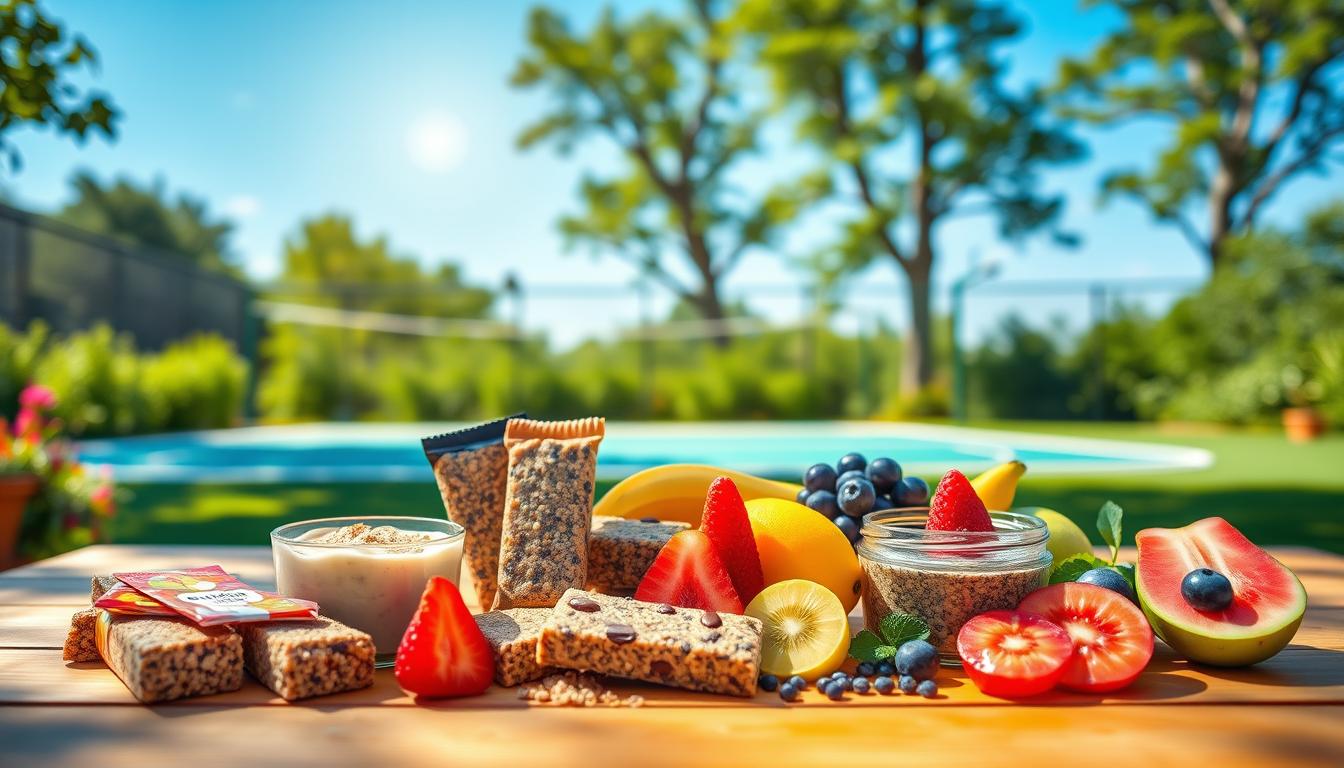
Eat easily digested carbs 60–90 minutes before play. Options like oats, a banana, or whole-grain toast give steady energy and sharpen focus.
Sip water before you start. In warm conditions add a pinch of electrolytes to the bottle to help prevent cramps and reduce fatigue without sugary drinks.
During-play hydration: water plus electrolytes to fight fatigue
Take small sips of water between games. If sessions extend, eat a date or half a banana for a quick carb top-up that won’t upset the stomach.
Post-session recovery: protein, complex carbs, and healthy fats for muscles
After play, pair protein and carbs to rebuild muscle and restore glycogen. Try a tofu and quinoa bowl or a pea-protein smoothie with oats and berries.
Add healthy fats—walnuts, chia, flax, or avocado—to support hormones and satiety while aiding recovery.
Day-to-day fueling to maintain stamina and balance energy levels
Distribute carbs around key sessions and include protein at each meal (aim 1.2–2.0 g/kg bodyweight). Start days with a glass of water and keep a bottle handy during play.
“Plan snacks and meals around your schedule so energy levels stay even and you arrive ready to move and think clearly.”
A sample week that balances court time, endurance sessions, strength, and rest
Structure your days so court time, endurance work, strength, and recovery support one another.
Aim for two to four community play sessions of 60–120 minutes and cap total play sessions at four per week to avoid fatigue. Insert two strength sessions early in the week and one or two focused endurance sessions—one aerobic base day (25–40 minutes of jogging or brisk walking) and one interval day (row 1:1 for 20 minutes or Tabata bike sprints).
Keep minutes intentional: place endurance work away from longest play days and limit lower-body intensity the day before heavy court time. Build speed with short accelerations during intervals and hold weekly volume steady for two to three weeks before adding minutes.
Rest, mobility, and community play to stay consistent
Schedule at least two rest or light-recovery days. Use 5–10 minute mobility micro-sessions on rest days for hips, ankles, shoulders, and single-leg balance to protect movement quality.
- Warm up dynamically before every session and avoid backward running.
- Choose lightweight gear and consider knee sleeves or braces for support.
- Plan group play for accountability and use solo practice days for serves or footwork ladders.
“Sleep 7–9 hours, hydrate during the day, and refuel after sessions so you arrive ready for the next play date.”
Conclusion
Finish strong by choosing a few focused habits that raise fitness, protect joints, and keep you moving well on the court.
Follow the blueprint: interval sessions that mirror rallies, steady aerobic minutes for staying power, and two to three strength sessions weekly to stabilize joints and produce usable power.
Rotate practical workouts—brisk walk or jog base builders, 20-minute rowing intervals with clear work/rest, and short Tabata bike sprints—to keep sessions varied and time-efficient.
Fuel smartly: time carbs before play, meet protein targets for muscle repair (about 1.2–2.0 g/kg), and sip water with a pinch of electrolytes in heat to fight fatigue.
Start small, track minutes and how your legs and back feel, and slowly add volume. Pick one endurance method and one strength routine this week, schedule them around community play, and refine as you gain confidence.
With consistent work and sensible recovery, you’ll preserve speed late in matches, protect key muscles, and gain an edge that keeps you enjoying the game long term.