Can a pair of thoughtfully made shoes really protect your knees and keep your quick steps sharp after fifty?
This short guide focuses on comfort, stability, and traction for older players. We explain how smart design and supportive features lower joint load while preserving agility.
You’ll learn what “vegan” means in modern performance gear and why plant-based materials can match leather in durability and grip.
We compare key options for indoor and outdoor play, with picks for wide feet, sensitive knees, and minimalist fans. The article includes concise reviews and clear buying tips so you can shop with confidence.
We also note brands like Will’s Vegan Shoes that use slow fashion, carbon-neutral production, and fast USPS shipping. That kind of ethics adds real value to your shoe investment and extends the product’s life.
Why Vegan Court Footwear Matters for Pickleball Players Over 50
Older pickleball players gain real benefits from shoes designed for stability, breathability, and low impact.
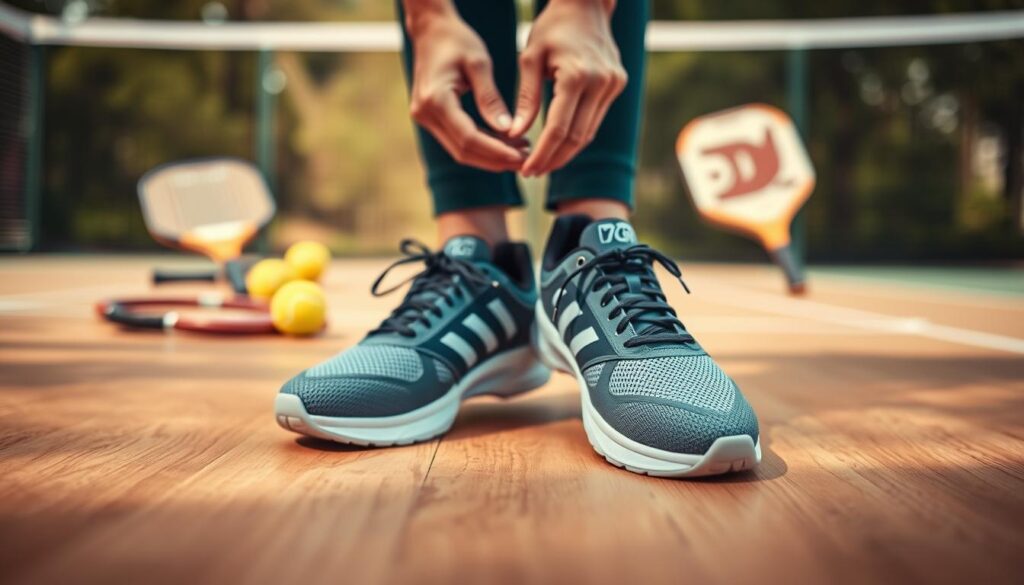
Choosing cruelty-free options does not mean sacrificing performance. Modern plant-based materials like Piñatex, Desserto cactus leather, apple and grape leathers, cork, and MIRUM offer breathable uppers and supportive structure.
These textiles often feel softer from day one and avoid the long break-in common with stiff leather. That can reduce pressure points and let players enjoy longer sessions.
“The right pair improves lateral stability and lowers impact to joints, helping players stay active for longer.”
Both men and women can find styles made with secure heel fit, midfoot lockdown, and roomy forefoot shapes for aging feet. Match features—extra cushioning for sensitive knees or flexible soles for natural motion—to how you play and the life you want to keep on the court.
Beyond fit and traction, choosing these materials supports cleaner processing and more sustainable supply chains while keeping performance high.
Understanding Vegan Materials: From PU to Piñatex, Cactus, and Apple Leather
Choosing the right upper material changes how a shoe breathes, stretches, and stands up to wear.
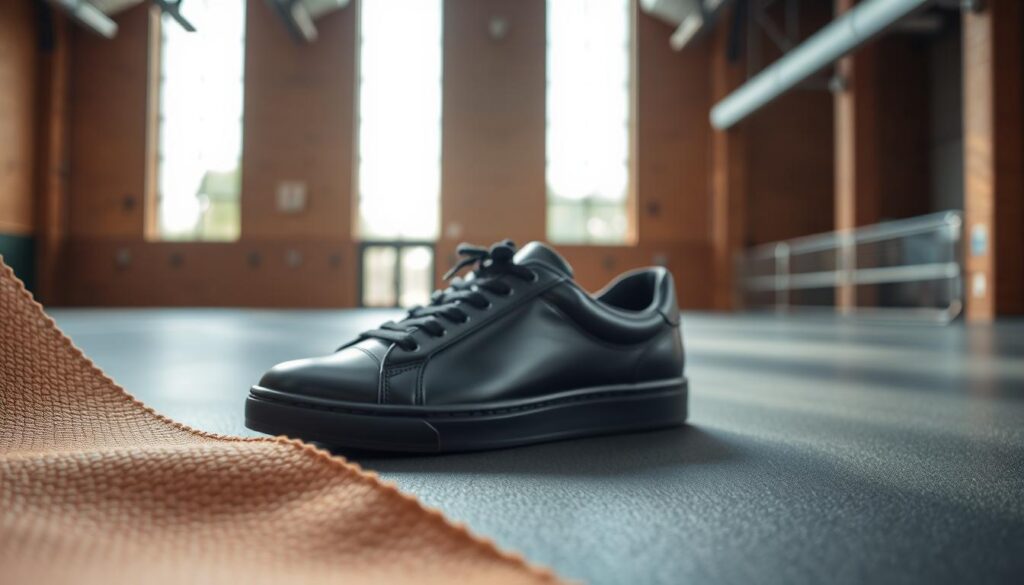
Breathability, water resistance, and durability in modern uppers
PU replaced older PVC in many premium designs because it lets more air pass through. That matters during long matches and sweaty indoor sessions.
Plant-based options like Piñatex, Desserto (cactus), apple and grape composites often have fine pores. These pores improve airflow and cut down on heat buildup.
Durability has come a long way. New corn, cactus, and apple-based leathers resist creasing and abrasion better than early synthetics.
Softness and stretch: how vegan suede and plant-based textiles behave
Many plant leathers and vegan suede feel soft from day one and conform quickly. That lowers hot spots during the break-in phase.
Stretch varies. PU usually stretches less than animal leather, so ordering the right size is important. Some plant-based leathers mimic natural leather and relax with wear.
- Water resistance: upper construction matters; some models add a thin waterproof membrane for drier uppers without stiffness.
- Forefoot comfort: suede or textile blends give toe splay room while midfoot structure keeps agility and lateral support.
- Buy smart: read product materials and construction info to know how a shoe will behave under lateral stress and outdoor use.
“Look for clear material specs and construction notes in reviews so you know what to expect on the court.”
How We Chose: Comfort, Support, Traction, and Style Criteria
To pick the best options we combined lab testing with on-court feedback from players over 50. We looked for reliable fit, predictable grip, and everyday style that suits warm-ups and errands.
Midfoot stability, heel fit, and forefoot room
We prioritized a secure heel to stop slipping on quick pivots.
Midfoot support had to control lateral moves without feeling rigid. Adequate forefoot room was essential for natural toe splay common with aging feet.
Outsole grip and court-safe soles
Traction testing covered indoor wood, synthetic gym floors, and outdoor pickleball surfaces. We checked for grip that does not mark floors and for tread patterns that handle stop-start play.
“Sole compound and tread pattern make the difference in quick transitions.”
Weight, flexibility, and cushioning balance
Lighter, flexible builds aid quick direction changes. We still required enough structure to prevent ankle roll.
Cushioning targets focused on shock absorption for knees and hips without a mushy ride.
| Criteria | What we measured | Why it matters |
|---|---|---|
| Heel lock | Slip test during lateral drills | Prevents blisters and loss of control |
| Midfoot | Arch and torsion support | Controls side-to-side motion |
| Sole | Compound & tread analysis | Grip, durability, and floor safety |
| Weight & Cushion | Quick change test & impact decel | Balance between agility and joint protection |
We synthesized user reviews and specs into concise notes so you see real-world use. Prioritize fit consistency within a brand to reduce break-in surprises when trying different styles.
Top Picks: Best Vegan Shoes for Pickleball Players Over 50
We tested practical styles that blend secure support with a roomy toe box for easy transitions.
Editor’s choice: balanced support and comfort
Why it stands out: This pick combines midfoot stability, reliable heel lockdown, and a forgiving forefoot. That mix suits longer matches and frequent practice.
Sizing note: try your normal size for a snug midfoot wrap. Consider a half size up only if you need extra toe room.
“Balanced support keeps motion stable without feeling bulky.”
Best value: performance without the premium price
Why buy it: Good traction and cushioning at a fair price make this a solid daily player for training sessions.
Sizing note: these run true to size; order regular sizing unless you prefer more forefoot space.
- Indoor vs outdoor: models with flat herringbone tread work best indoors; deeper lugs suit outdoor play.
- Transition-friendly: brands like Vivobarefoot, Xero, and Lems offer softer platforms that ease into wider toe boxes.
- Rotation tip: keep one pair for matches and one for training to extend sole life and keep grip consistent.
| Pick | Best for | Sizing | Quick pros / cons |
|---|---|---|---|
| Editor’s Choice | Matches & long sessions | True size (half up for wide toes) | Pro: balanced support; Con: slightly firmer midsole |
| Best Value | Daily training | True size | Pro: reliable traction; Con: fewer colorways |
| Barefoot-style option | Transition & natural motion | Size up for toe splay | Pro: wide toe box; Con: less arch structure |
| Hybrid trainer | Outdoor & mixed courts | True size | Pro: durable outsole; Con: heavier than barefoot models |
Check current availability and colorways from ethical brands with strong customer support before you shop.
For men and women seeking comfortable, court-ready options, these picks balance performance and value while easing the break-in process.
Minimalist and Barefoot-Inspired Vegan Court Options
Barefoot-inspired trainers let feet sense the surface, which can sharpen balance and reaction time. Many modern low-profile styles add a secure midfoot wrap and wider toe boxes to suit older players.
Transition tips for players new to barefoot sneakers
Start slow. Use short practice drills and warm-ups before full matches. Alternate these shoes with a more cushioned pair on the same day.
Work on foot strength with simple exercises: toe curls, calf raises, and single-leg stands. Gradually reduce insole thickness as comfort grows.
- What they feel like: thinner soles, more ground feedback, and a wide toe box for natural splay.
- Benefits: improved proprioception and quicker footwork for pivots and reach.
- Cautions: some players keep a little cushioning to protect knees and hips.
Brands to check in reviews include Vivobarefoot, Feelgrounds, Xero, Ahinsa, and Freet. Look for outsole patterns that handle controlled stops and lateral moves.
“Start with drills and short sessions; only move to full matches once your feet feel strong and stable.”
Best for Wide Feet and Natural Toe Splay
Players with wide forefeet or bunions do best in shoes that mirror the foot’s natural shape.
Brands like Ahinsa, Feelgrounds, Groundies, Lems, and Vivobarefoot offer anatomical toe boxes and flexible soles. These styles let toes spread, improving balance and push-off power for dinks, volleys, and quick lateral shuffles.
Fit notes: some models run roomy in the forefoot but snug at the midfoot to stop slippage during cuts. Check in-shoe measurements and sizing charts before you buy to avoid returns.
- Recommend models that accommodate bunions or mild toe overlap.
- Try a lacing pattern with a skipped lower eyelet to relieve forefoot pressure while tightening the top for heel lockdown.
- Wear thin technical socks to keep feel and stability without crowding toes.
Durability tip: look for reinforced toe guards and abrasion-resistant uppers if you do many lateral drills. Neutral colorways pair easily with on- and off-court outfits and simplify matching for both women and men.
“Compare sizing charts and in-shoe lengths to get the right fit the first time.”
Stability and Cushion Favorites for Sensitive Knees and Hips
A stable platform and tuned sole design can make play safer and more comfortable after fifty.
Look for reinforced sidewalls, a structured upper, and clear midfoot support. These features limit inward knee collapse during quick lateral moves.
Choose firmer, responsive foams if you need a stable landing. Moderate cushioning works well when you want shock protection without sloppy pivots.
Outsole patterns matter. A shallow herringbone or multi-directional tread helps brake and slide in a controlled way, reducing torsion on knees and hips.
Stack height should be moderate: enough to absorb impact but low enough to keep court feel and balance for men and women players.
Removable insoles let you tune arch support or add heel pads. Try different inserts to find the right balance of comfort and control.
Before match day, test shoes at home with lateral lunges and short shuffles. That reveals grip, ankle support, and any midfoot slippage.
Rotation helps: alternate two pairs so midsoles recover between sessions and performance stays consistent.
| Feature | What to expect | Why it helps |
|---|---|---|
| Reinforced sidewalls | Firm lateral support | Limits knee valgus on cuts |
| Responsive midsole | Controlled rebound | Stable landings without rebound wobble |
| Multi-directional tread | Secure braking and slides | Reduces torsion on joints |
| Removable insole | Custom arch/heel options | Personalized cushioning and support |
“Models praised in reviews for stable platforms include hybrid trainers and mid-stack options that balance cushion with court feel.”
Brands to Know: Ethical Vegan Shoes and Court-Friendly Styles
Not all makers balance sustainable production with athletic needs—some stand out for both. This short guide highlights labels that combine ethical practice, reliable fit, and designs suited to quick lateral play.
Will’s Vegan Shoes — slow fashion and EU-made quality
Will’s has operated as a vegan company since 2012 with carbon-neutral certification across products and operations. Their shoes are made in Italy and Portugal under EU manufacturing standards.
Packaging is plastic-free: paper shipping bags, cardboard boxes, and paper tape. For US customers, tracked USPS shipping and a 365-day free returns/exchanges policy make online ordering low-risk.
Barefoot and minimalist labels to consider
Vivobarefoot, Feelgrounds, Xero Shoes, Groundies, and Ahinsa offer vegan-friendly sneaker options that suit natural movement. Many of these styles feature wide toe boxes and low-profile soles that help with balance and quick pivots.
“Check official store listings and product pages for verified material details and outsole descriptions.”
- Fit notes: some brands run narrow at the midfoot but roomy up front—read reviews and size charts before you buy.
- Shop tip: compare return windows and warranty policies across brands to reduce risk when ordering online.
- Quick checks: verify materials, outsole compound, and manufacturer sizing to ensure the styles match your performance and ethical expectations.
| Brand | Why it matters | Typical fit |
|---|---|---|
| Will’s Vegan Shoes | Slow fashion, carbon-neutral, EU quality | True to size; structured midfoot |
| Vivobarefoot | Barefoot feel, vegan models available | Wide toe box; size up for toe splay |
| Feelgrounds / Xero / Ahinsa | Minimalist options with court-capable soles | Varies by model; check reviews |
Vegan Court Footwear
Good court-ready shoes hinge on three things: lateral control, reliable grip, and abrasion-resistant uppers.
Below is a concise selection of on-court options with quick performance notes to help compare models fast.
- Maximum support: Structured midsole, reinforced sidewalls — best for sensitive knees. Runs standard to slightly narrow; expect a short break-in.
- Wide-toe comfort: Roomy forefoot and flexible sole — ideal for bunions and natural toe splay. Often true to size or wide; minimal break-in.
- Light and quick: Low stack, lighter weight for speed — suited to fast shuffling. Usually narrow fit; allow two training sessions to adapt.
| Type | Best use | Fit note |
|---|---|---|
| Support | Sensitive joints, league play | Standard–narrow; short break-in |
| Wide fit | Comfort, long sessions | True or wide; little break-in |
| Lightweight | Speed drills, quick matches | Narrow; allow gradual use |
“Check material labels and construction notes so you know how a shoe was made.”
Look up reviews for long-term wear and consistent sizing across colorways. Confirm return policies and US shipping estimates before you buy, especially if you need the pair for an upcoming league or tournament.
Women’s Vegan Sneakers: Supportive and Stylish Picks
A good pair of women’s sneakers can bridge match-day performance and weekend outfits.
Many brands now offer options that mix stability, cushioning, and clean lines. Vivobarefoot, Feelgrounds, Groundies, and Xero Shoes appear often in reviews for wide toe boxes and flexible construction.
Fit and function notes
Choose shoes with a snug heel and midfoot wrap to prevent slippage during quick lateral moves.
Look for roomy toe boxes if you have bunions or need extra toe alignment space. Removable insoles let you add custom arch support for longer play or travel.
Style and rotation tips
- Neutral colorways pair well with athleisure; monochrome uppers blend with jeans and layers.
- Keep one dedicated court pair and one daily pair to preserve grip and sole life.
- Prefer models with reinforced eyelets, mesh panels, and overlays—these hold up better under lateral stress, per many reviews.
Quick care: spot-clean light colors soon after play and air-dry away from direct heat to prevent fading and warping.
“Check size charts and read user feedback to confirm consistent sizing across editions.”
Men’s Vegan Sneakers: Grip, Fit, and All-Day Comfort
Good men’s sneaker options balance grip, secure fit, and comfort for work-to-play days. Brands like Vivobarefoot, Xero Shoes, Groundies, and Lems offer wide-toe-box designs that suit everyday wear and warm-ups.
Look for outsoles that lock laterally for quick side shuffles, a snug heel and midfoot to prevent slip, and a roomy forefoot for natural toe splay. For men with higher insteps or wider forefeet, size guidance often suggests trying the same brand in a wide fit or adding a thin insole for a better lockdown.
- Cushioning choice: firmer midsoles add stability; softer foam helps long sessions if knees are sensitive.
- Durability: seek reinforced toe caps and durable uppers for stop-start play.
- Performance tip: pair with moisture-wicking socks to reduce slippage and odor during drills.
- Tester note: reviewers praise breathability in many vegan models and report good odor control with regular airing.
| Feature | Best for | Why it matters |
|---|---|---|
| Grip | Lateral moves | Prevents slips on quick cuts |
| Fit | High instep / wide feet | Keeps heel secure without pinching toes |
| Cushion | All-day comfort | Balances shock absorption and court feel |
“Try side shuffles and lunges at home to confirm lockdown before a match.”
Cold-Weather Choices: Vegan Winter Boots and Warm-Ups for Court Days
A smart winter boot bridges the gap between commute traction and easy court changeovers.
Pick boots with deep lugs for wet sidewalks and light snow so you arrive steady and dry. Look for insulated or fleece-lined options that stay warm without bulk. That makes swapping into your match shoes quick and simple.
Chelsea boots in synthetic constructions are handy for on-off trips. They provide a polished look and fast on/off access when you enter an indoor gym.
When you need more ankle coverage
Hiking boots–style designs add higher ankle support and aggressive grip for icy walks. Snow boots may be better in heavy precipitation, but they can be bulky to change out of before play.
- Compare winter boots vs lighter snow boots by traction, insulation, and ease of change.
- Check product specs for non-leather linings; many brands now offer fully animal-free interiors.
- Keep a dry bag in the car to swap shoes and protect indoor floors and your match shoes.
Will’s Vegan Shoes is a good option for durable, EU-made boots with carbon-neutral delivery and easy US returns for size peace of mind.
Care, Cleaning, and Longevity for Vegan Leather and Suede
B are cleaning steps protect uppers and keep shoes ready for play. Follow a simple routine after each session to prevent salt or dirt buildup.
Simple cleaning routine and drying best practices
Dust with a soft dry cloth. Wipe lightly with mild soapy water and a damp cloth. Do not submerge the pair; water can loosen adhesives and layers.
Air-dry away from direct sunlight and heat. Once fully dry, apply a small amount of polish or cream in circular motions. Let rest for 24 hours before use.
Conditioning and waterproofing do’s and don’ts
For synthetic and plant-based leather, condition sparingly and test on a hidden area first. Avoid animal-based products.
For suede-like uppers, use a soft brush and spot-clean stains. Avoid heavy scrubbing to preserve nap and color.
| Material | Key care step | When to reapply |
|---|---|---|
| Plant-based leather | Mild soap wipe + light conditioner | Every 6–12 months or after heavy use |
| Suede-like uppers | Brush + spot-clean | After visible soiling or seasonal change |
| Waterproof membranes | Use compatible spray | Reapply after heavy rain or 10–20 uses |
Rotate pairs, remove insoles to air, and store in a breathable bag or box after shoes are fully dry to extend life and freshness.
Sizing, Fit, and Break-In: Getting the Right Feel from Day One
Proper sizing and a short break-in make the difference between a supportive pair and one that causes blisters or knee pain.
Modern plant-based composites often soften and conform with wear, while PU usually keeps shape and needs precise sizing. Consider breathability and any waterproof membrane when you pick materials and options.
Measure length and width while standing. Leave about a thumbnail’s space at the toe for splay during lateral moves. Compare those numbers to brand size charts — unisex conversions can differ by a half size.
Use lacing tricks: skip a lower eyelet to ease midfoot pressure, then tighten the top for heel lock. Test at home with short side steps and lunges to spot hot spots before match day.
“If multiple reviews say a style runs narrow or wide, size accordingly or try another last within the same brand.”
Keep original packaging during trials to simplify returns. For sensitive knees, break in slowly: start with drills, then build to full matches as comfort and confidence grow. This approach helps both men and women get the best selection and fit from day one.
Shopping in the United States: Shipping, Returns, and Customer Support
A clear return window and responsive support cut the risk when you shop for performance shoes.
Fast delivery, long returns, and helpful support
Many ethical brands ship from U.S. or EU hubs with tracked USPS service for fast, reliable shipping. Will’s Vegan Shoes, for example, sends tracked parcels and offers a 365-day free returns and exchange policy for peace of mind.
That long window helps you test fit and on-court performance without rush. Returns are often paper-free and processed within days after the courier receives the package. Brands commonly offer refund, replacement, or repair if customers are not satisfied.
- Check official store pages for accurate stock and size info rather than third-party listings.
- Read reviews and size charts before you buy to reduce returns.
- Order two sizes only when return policies are favorable; contact support with fit questions (toe box, instep) first.
| What to confirm | Why it matters | Tip |
|---|---|---|
| Shipping timeline | Plan for league or tournament dates | Verify peak-season delays |
| Return window | Time to test fit and feel | Long windows reduce risk |
| Support policy | Repairs or replacements extend value | Save contact details before you shop |
When in doubt, contact brand support with photos and measurements. That simple step often prevents returns and helps you pick the best options for play.
Eco Credentials: Carbon Neutral, Plastic-Free Shipping, and Slow Fashion
Durable design and mindful packaging matter as much as traction and fit for players over 50. Brands that focus on low-impact production can cut lifecycle emissions without losing performance in shoes and boots.
Carbon-neutral operations mean a brand measures emissions and offsets or reduces them across manufacturing and shipping. That lowers the product’s total footprint while preserving quality and materials athletes expect.
Plastic-free shipping uses paper shipping bags, recyclable cardboard boxes, and paper tape to reduce waste. A simple change in packing keeps microplastics out of landfills and makes returns easier for a store and the customer.
Slow fashion describes permanent styles refined over years rather than seasonal churn. Cleaner designs often last longer, so you replace shoes less and extend each pair’s useful life.
| Eco feature | What it means | Player benefit |
|---|---|---|
| Carbon-neutral | Measured emissions + offsets | Lower lifecycle impact, same performance |
| Plastic-free packaging | Paper bags & recyclable boxes | Less waste; easier returns |
| Slow fashion | Timeless designs, EU-made | Better durability and fit consistency |
Check product pages for clear content lists to confirm materials and vegan boots claims. EU manufacturing under strict labor rules adds assurance that the pair you buy was made responsibly.
“Choose brands and stores whose policies match your values — it keeps quality high and environmental cost low.”
Conclusion
Choosing wisely means getting grip, support, and a feel that suits your play and foot shape. Use our reviews and criteria as a roadmap when you narrow options by toe shape, court surface, and cushioning needs.
Consider both minimalist and more supportive styles, and transition slowly if you move to a wider toe box or thinner sole. Simple cleaning and rotation extend the pair’s life and keep performance steady.
Explore men’s and women’s sneaker picks for on- and off-court wear. Favor brands with ethical production, clear return policies, and helpful support.
Ready to buy? Use the shop links and size guides to secure the right shoes before your next league match.