Can a few small posture changes help you play longer without nagging knee pain?
This short how-to guide helps vegan pickleball athletes over 50 refine body alignment for safer, more efficient movement on court. It targets common causes of knee irritation, like weaker quads and tight outer hips, and shows simple ways to reduce joint stress during dinks, volleys, and lateral shuffles.
You’ll learn a head-to-toe approach: foot placement, knee-over-toe tracking, hip activation, and an upright torso to keep the body centered and ready to react. These quick cues preserve energy, improve control, and lower strain as you age.
Mindful movement paired with gentle strengthening and mobility is often safer than pushing through pain. This guide previews warm-ups, low-impact swaps, strengthening sequences, and when to modify or see a pro.
Why stance matters after age 50: aligning the knee joint for pain-free motion
How you set your feet and knees changes how much force the joint takes during every quick move on court. In pickleball, frequent starts, stops, and pivots multiply load when alignment is off.
After age 50, declining quadriceps strength and tighter outer hips can shift patellar tracking. That change may increase pain and make full bending or straightening uncomfortable.
Keeping the knees stacked over the feet guides smooth motion and lowers shear forces. That helps knees tolerate repeated lateral steps, reaches, and quick direction changes with less strain.
When joints are aligned, surrounding tissues share load more evenly and provide better support. Athletes who align knees with toes and maintain a tall torso often report improved stability and fewer flare-ups.
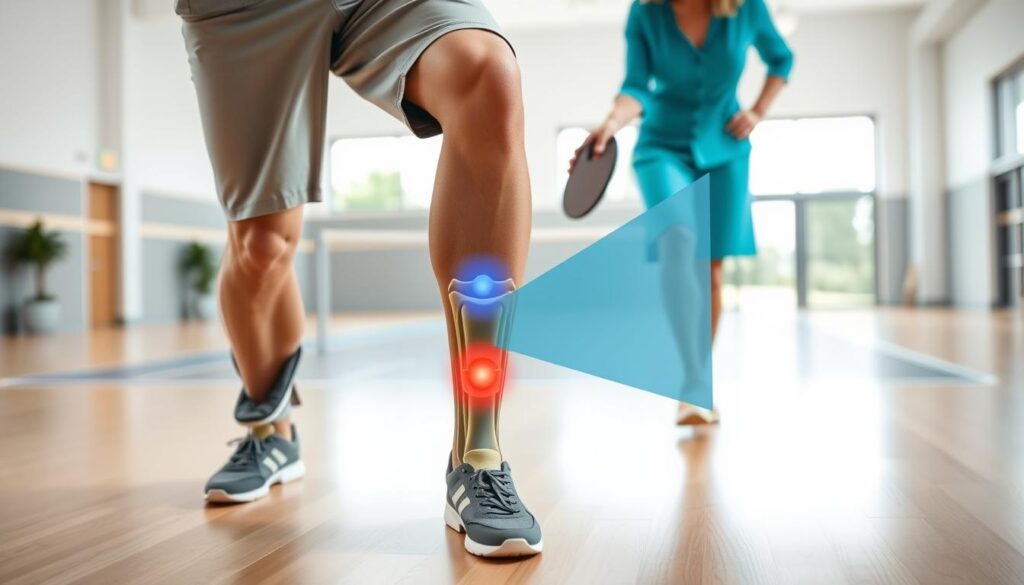
Think of stance as a learned skill: tweak alignment, add simple hip and thigh strengthening, and do light mobility work. Early adjustments at the first sign of discomfort can keep small issues from becoming persistent problems.
Mastering a knee-safe stance on court
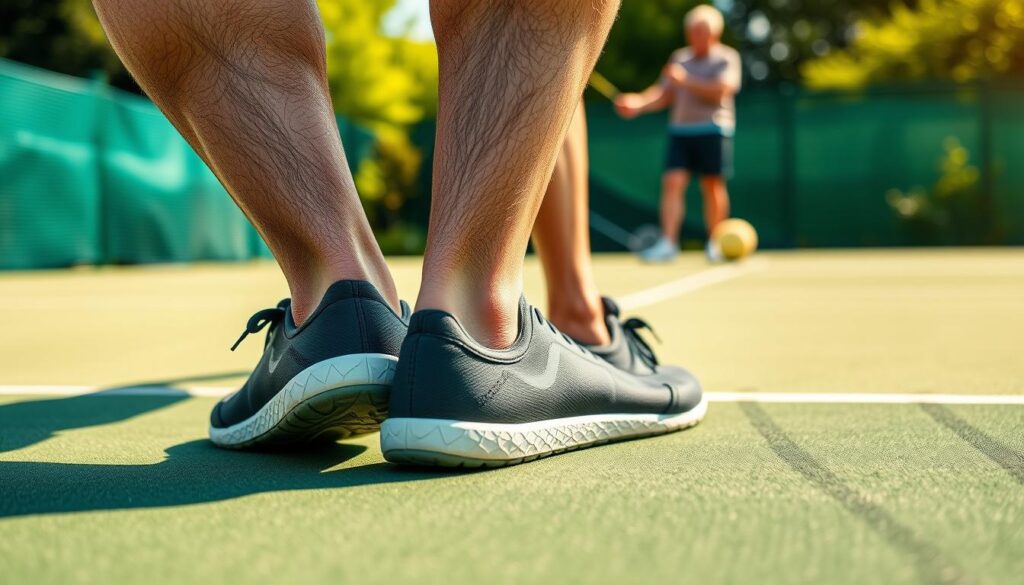
Small changes to how you place your feet and hips make big differences for knee comfort during play. Find a neutral position with feet under the hips and toes slightly turned out. This keeps weight balanced and readies the body for short, quick moves.
Foot and heel position
Keep the heel grounded and feel the floor through all points of the feet. A quiet heel improves stability for shuffles and split steps.
Knee-over-foot alignment
Watch the knee track directly over the foot during mini-loads. Avoid collapsing inward; imagine nudging the knee slightly outward toward the second toe to hold alignment.
Hip and thigh engagement
Squeeze the glutes and lightly brace the quads and hamstrings to create a supportive cylinder around each leg. This resists inward collapse and steadies the knee.
Shoulders and back
Stand tall with relaxed shoulders, a long back, and soft knees. Keep even weight through both legs so you can move to the front or back without pitching forward.
One-leg stability for dinks and volleys
Shift onto one leg gently without twisting the knee. Use micro steps with the free foot to adjust and tap the floor if balance wobbles to reset alignment before continuing.
Warm-up and mobility sequence to protect the knees before play
Start play-ready by getting blood flowing with a short, gentle cardio warm-up. Spend 5–10 minutes walking or using a stationary bicycle to warm the larger muscles and lubricate the joints.
Low-impact warm-up
Begin with easy movement for 5–10 minutes. This increases circulation to the thighs and calves and reduces stiffness before court drills.
Calf stretch at the wall
Stand facing a wall with the back heel flat and toes slightly turned in. Press the hips forward and hold for 30 seconds, relax 30 seconds, then repeat. Keep the heel down and the knee aligned with the toes.
Standing quadriceps stretch
Hold a chair or the wall for balance. Bring the heel toward the buttock and keep a tall torso. Hold 30–60 seconds per side and avoid arching or twisting the back.
Supine hamstring stretch
Lie on the floor and loop a towel behind the thigh if needed. Extend the leg and pull gently toward the head for 30–60 seconds. Use your hands on the towel, not the knee, and keep the hips square.
- Tip: Breathe slowly and move through these exercises with control. If short on time, do one round of each for at least 30 seconds per leg.
Strengthen the muscles that support the knee joint
A short, steady strength routine trains the legs to support the knee during shuffles and reaches.
Half squats
3 sets of 10. Sit back as if reaching for a chair, lower ~10 inches, keep the chest lifted.
Place more weight through the heels, hold 5 seconds near the bottom, and avoid bending at the waist.
Hamstring curls & calf raises
Hamstring curls: 3×10 while holding a chair with your hands. Raise the heel toward the ceiling, keep knees close, hold 5 seconds.
Calf raises: 2×10. Rise with weight centered on the ball of the foot, then lower with control to reinforce ankle and foot linkages.
Leg extensions and straight-leg raises
Leg extensions (seated): 3×10, hold at the top 5 seconds, avoid swinging.
Straight-leg raises: supine 3×10 (6–10 inches), prone 3×10 with glutes tight; hold 5 seconds and keep neck relaxed.
Hip abduction and adduction
Side-lying abduction: 3×20 to 45°, pause 5 seconds, avoid rotation. Adduction: 3×20 bottom leg raises 6–8 inches, hold 5 seconds.
“Strong, balanced muscles let the knee share load so you move safer and with more control.”
| Exercise | Sets x Reps | Key cue |
|---|---|---|
| Half squat | 3×10 | Weight in heels, chest up |
| Hamstring curl | 3×10 | Hold chair with hands, heel to ceiling |
| Hip abduction | 3×20 | No hip rotation, hold 5s |
Do these exercises two to three days per week. Progress slowly and focus on control to protect the knee and build lasting support.
Smart movement swaps when knee pain flares
Simple exercise substitutions can keep your fitness intact while you protect a sensitive knee.
When pain spikes, reduce high-impact moves and choose options that let you keep moving without adding stress. Small changes let you stay active and avoid a longer setback from an acute injury.
Modified side plank — knee-down setup
Lie on your side with knees bent about 90° and feet stacked behind you. Place your forearm under the shoulder and push the hips up so the body forms a straight line from head to knees.
Push straight up (not toward the feet) and roll the top hip slightly forward. Hold with steady breathing to protect the side of the knee while keeping core and hip strength engaged.
Low-impact cardio alternatives
On sore days, swap running or jumping for cycling, swimming, or the elliptical. These activities preserve conditioning while lowering repetitive load through the knees.
- Replace deep squats or jumps with partial-range strength work and controlled tempo.
- Shorten pickleball sessions and add longer rests when lateral moves irritate the joint.
- If the same movement keeps causing pain, seek advice from a physical therapist to check mechanics and rule out a bigger injury.
“Smart swaps keep you consistent while symptoms resolve — they are a strategy, not a step backward.”
On-court footwork, turning, and pacing for knee-safe play
Simple turning habits on court can cut knee torque and keep you moving longer.
Pivot with your feet, not the knees. Lift and place each foot when changing direction to avoid twisting the joint in place.
Use short, quick steps on a flat floor to stay balanced. Keep weight centered over the mid-foot so you can stop or push off without the knee collapsing.
Practical cues to train the movement
Rotate by stepping the feet in small arcs instead of spinning the hips around a planted foot. This reduces ligament stress and keeps alignment from hip to knee.
Coordinate arm swings with leg work to keep balance during rapid shifts. Smooth arm movement helps maintain centered weight and steady legs.
| Drill | Focus | How to do it |
|---|---|---|
| Micro-step shuffle | Mid-foot balance | Short lateral steps, stay light on the floor |
| Pivot practice | Foot-first turning | Lift, place, then rotate body with the feet |
| Quiet landing drill | Controlled stops | Knees soft, torso tall, heels touch gently |
| Paced rally reps | Intensity modulation | Burst then recover; avoid back-to-back max torque |
“Move the feet the right way to prevent avoidable errors and extend play time.”
Footwear and surface choices that reduce knee strain
What you put under your feet affects how your knees and hips absorb every lateral step.
Select court shoes with stable arch support and responsive cushioning to keep the feet aligned. Proper support improves knee tracking and lowers fatigue during quick movement.
Inspect soles often for uneven wear and replace shoes before the midsole collapses. Small changes in sole shape shift the weight pattern and can overload the joints.
Avoid long periods in high heels or totally flat, unsupportive shoes. Both change stride and can alter back posture, which affects knee mechanics off-court.
- Match footwear to the surface: choose tread for controlled slides on grippy courts and traction on slick floors.
- Rotate pairs to spread wear and use lightweight insoles for extra midfoot support without losing stability.
- Keep lacing even and snug to lock the heel while allowing forefoot mobility for safe cuts.
If soreness returns after sessions, try a different model with similar stack height but better lateral support. Good shoe choices protect the chain from feet to knee to hip and help you move with less strain.
Posture, weight distribution, and recovery habits for joint health
Tiny adjustments in how you stand, sit, and rest can lower knee stress and speed recovery.
Stand tall with a relaxed back and soft knees. Keeping the body upright lets muscles absorb load instead of letting joints take all the force.
Evenly distribute weight through both legs and shift gently over time. Small side-to-side changes every minute reduce stiffness and help circulation through your joints.
Controlled sit-to-stand
Use a stable chair and lean slightly forward. Place your hands on the thighs or armrests if needed, then push through the heels to rise.
Avoid dropping into the chair on return. Lower slowly to protect the knees and keep the hips aligned with the back.
Short movement breaks
Take a minute or two of movement every 30–60 minutes. Walk, march in place, or do gentle hip and ankle circles to re-lubricate the joints.
When seated, keep feet flat with knees at about 90 degrees. If necessary, use a footrest to maintain that angle and prevent pressure behind the knees.
“Small, frequent movement resets protect joints and keep you comfortable throughout the day.”
| Habit | How to do it | Benefit |
|---|---|---|
| Weight shifts | Shift weight every 30–60 sec between legs | Reduces stiffness, improves circulation |
| Sit-to-stand | Lean forward, hands on thighs, push through heels | Limits knee strain, strengthens legs |
| Movement breaks | 1–2 minutes walking or mobility per hour | Re-lubricates joints, reduces first-step ache |
Pay attention to daily loading habits like carrying bags on one side. Redistribute loads to keep hips level and avoid extra stress traveling to the knees.
End each day with light mobility or gentle stretches for calves, quads, and hamstrings. Treat recovery as active care that supports long-term joint health and better play time.
Vegan athlete considerations: fueling muscles and supporting recovery
Smart fueling and simple routines help veteran plant-based players stay active without added joint stress.
Prioritize protein from varied plant sources — legumes, tofu, tempeh, seitan, and quinoa — to rebuild muscles that stabilize the knee during play.
Include omega-3-rich choices like algae oil, walnuts, chia, or flax to help manage post-exercise soreness and support joint comfort over time.
- Ensure calcium and vitamin D via fortified plant milks, calcium-set tofu, leafy greens, and safe sun exposure or supplements to back bone health.
- Time carbohydrates around sessions: a light carb snack before play and a protein-plus-carb meal afterward speeds recovery and replenishes stores.
- Hydrate consistently. Even mild dehydration reduces tissue elasticity and can make movement feel stiffer.
Consider B12 supplementation if you follow a fully plant-based diet long term. It helps maintain energy metabolism for steady training time and fewer mid-session dips.
Pair recovery nutrition with daily mobility and two to three strength sessions weekly. This combination improves flexibility, builds capacity, and lowers the risk of overuse injury.
“Respect early pain signals and scale intensity — small adjustments today prevent larger problems tomorrow.”
If you have doubts about nutrient sufficiency or symptom patterns, consult a registered dietitian familiar with plant-based athletes for individualized support.
Your knee-safe stance weekly plan
A consistent weekly routine ties together strength work, flexibility, and short on-court practice to protect knees and sharpen reactions. Follow the simple template below and adjust by how your body feels.
Strength days
Plan 2–3 sessions per week. Do 3 sets of 10–20 reps for each exercise: half squats, hamstring curls, calf raises, leg extensions, and straight-leg raises.
Use a controlled tempo with 5-second holds near the bottom of half squats. Add light weight only when technique is steady and pain-free.
Flexibility focus
On most days, include calf, quad, and hamstring work. Hold each stretch 20–60 seconds per side to keep range and reduce tightness.
Record the seconds for each hold so you can see progress week to week.
On-court practice
Before play, spend 10–15 minutes on floor drills: split steps, lateral shuffles, and pivot practice. Emphasize quick movement, even weight through both feet, and the proper position during rallies.
“Consistency in small doses—short warm-ups, steady lifts, and daily mobility—builds durable control on court.”
Quick log tip: Track session time, reps, and stretch duration. Reassess monthly and tweak volume on heavier play weeks to prioritize recovery.
When to seek advice from a physical therapist
If a knee problem lasts beyond a few days or comes with worrying signs, early evaluation can stop a small issue from becoming a long-term setback. A physical therapist can sort whether symptoms come from muscle weakness, gait quirks, or a true structural injury.
Red flags: swelling, catching, giving way, or persistent knee pain
Seek prompt advice from a physical therapist if you notice swelling, clicking or catching, episodes where the knee gives way, or pain that does not improve with rest and simple modifications.
Also report pain after long walks or stairs, sudden spikes after a change in training, or any recent injury. Early assessment often finds reversible issues and speeds recovery.
Technique tune-ups: gait, hip strength, and shoulder-to-hip alignment checks
A clinician can run a movement screen to evaluate gait mechanics, hip strength, and shoulder-to-hip alignment. These checks reveal habits that overload the joint and suggest focused fixes.
If a specific movement always triggers pain, a therapist will adjust exercise selection and technique. They commonly prescribe hip and core strengthening plus knee-friendly drills to improve load sharing during play.
| When to see a PT | What they assess | Expected outcome |
|---|---|---|
| Swelling or locking | Joint exam, imaging referral if needed | Rule out structural injury |
| Instability or giving way | Balance and ligament screening | Targeted stability program |
| Persistent pain with activity | Gait and movement analysis | Technique changes and home progressions |
“Early, specific advice shortens recovery time and helps people return to play with confidence.”
Bring context: note recent footwear, training changes, or record a short video of your footwork or warm-up. This helps the therapist pinpoint causes and create a practical plan with clear return-to-play steps.
Conclusion
A few consistent moves and checks each week keep knees resilient and your game steady.
Practice the core routine: warm up, stretch hips/hamstrings/calves, and do strength work two to three times weekly. Good footwear and even weight distribution provide daily support for comfortable movement on court.
Listen to knee pain and adjust fast. Addressing small flare-ups the right way protects the joint and keeps fitness gains on track.
Small, steady habits—tall alignment, soft knees, and regular recovery—add up. Make the checklist part of your pre-play ritual, track simple wins, and schedule a tune-up with a pro when needed.
If these steps fit your routine, you can extend active years and enjoy more matches with less worry. Share what worked for you and help build a community of better movement.