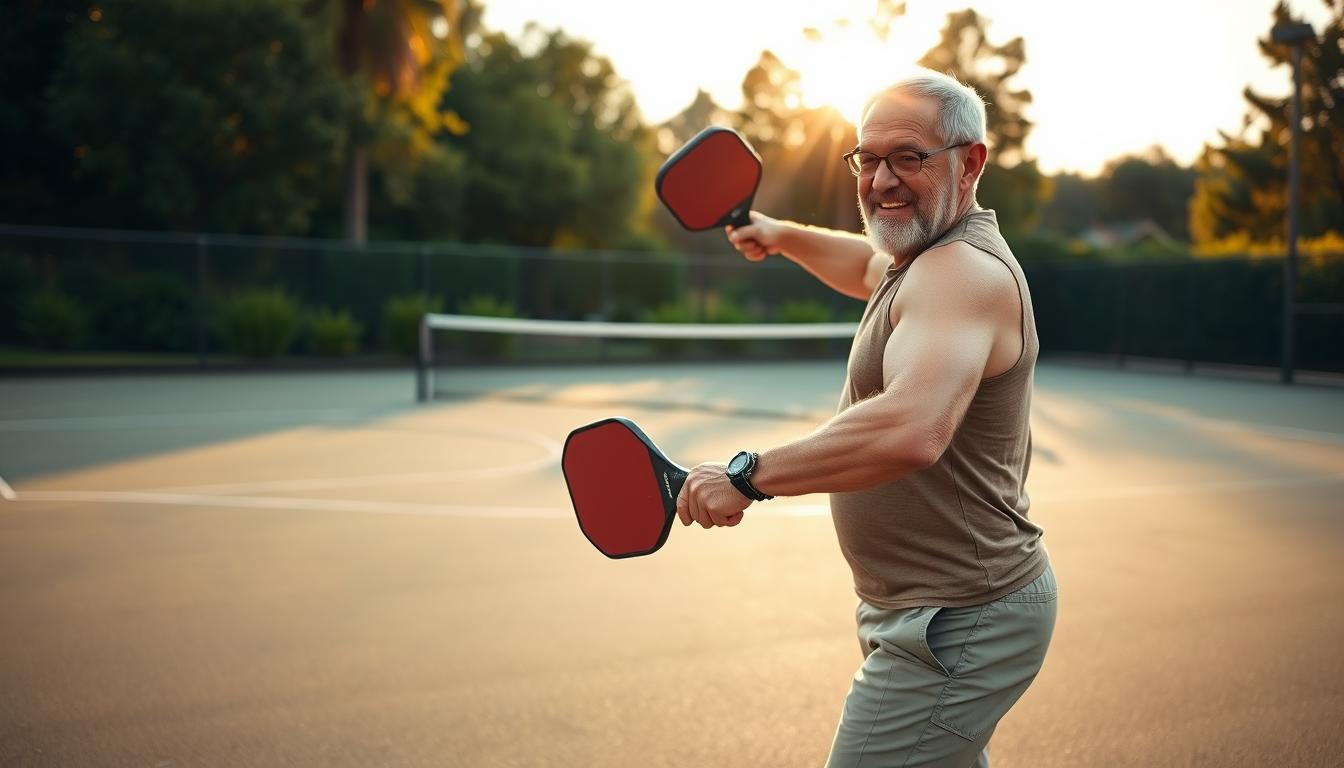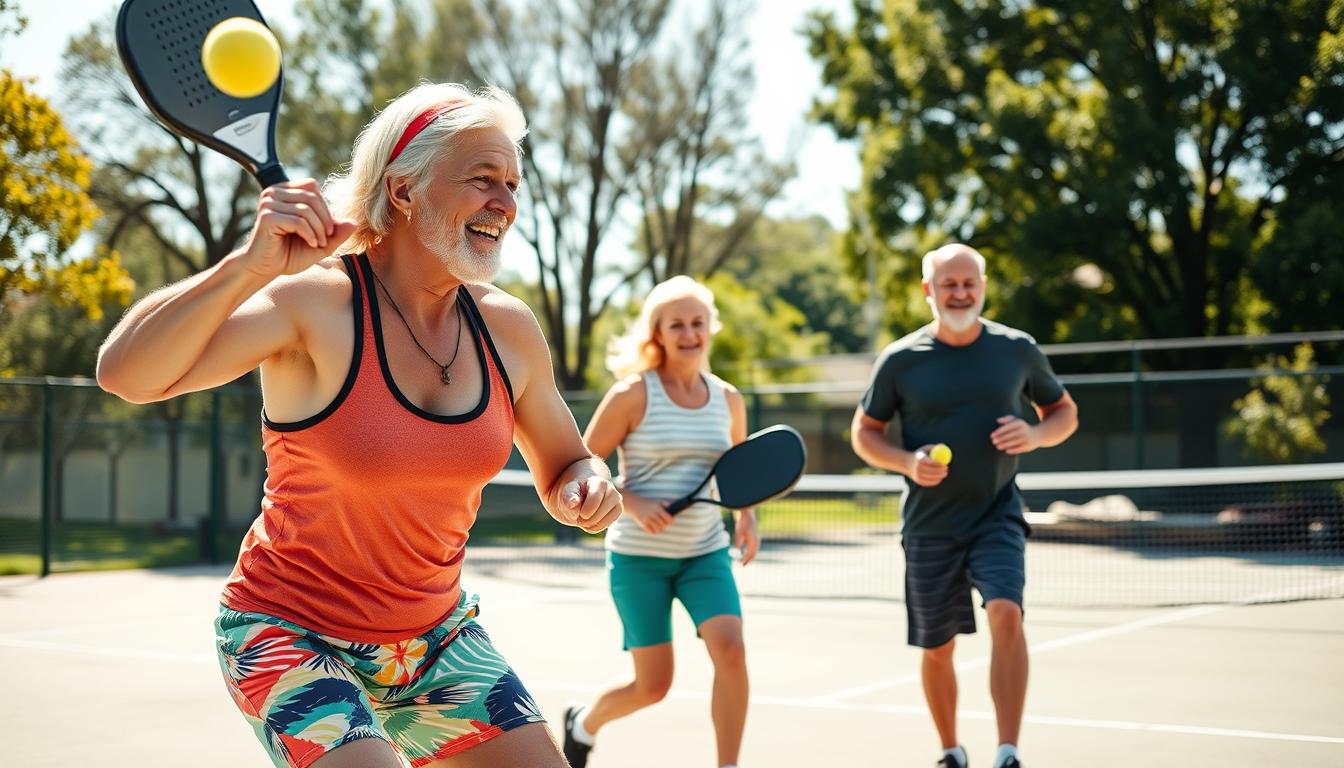
Can a few simple tweaks add real pace to your paddle without risking your joints?
Many senior players think faster means harder. The smarter way uses safe mechanics, better sequencing, and short, focused training blocks.
Start with an athletic setup that removes tension from the hands and arms. A slight counter move and a long hand path tap into stored energy, much like proven golf principles adapted for pickleball.
Practice with intent, log your radar numbers, and keep video of your fastest good swings. That consistency helps you tell feeling from fact and speeds progress over time.
We’ll cover mobility, vegan fueling, and safety-first progressions so you can chase speed while keeping control and enjoying steady gains.
Understanding swing-speed refine for senior vegan pickleball players
For seniors, small mechanical changes unlock notable gains in paddle velocity and control.
User intent centers on three outcomes: add speed, keep control, and repeat good swings. The goal is measurable gains that do not sacrifice placement or joint comfort.
User intent and performance goals: speed, control, and consistency
Set a simple target: faster swings that still find the court. Aim for consistent contact and predictable ball flight.
Lighten the grip and reduce hand tension to free movement. Keep base wide and the upper body slightly behind the ball to protect balance while you accelerate.
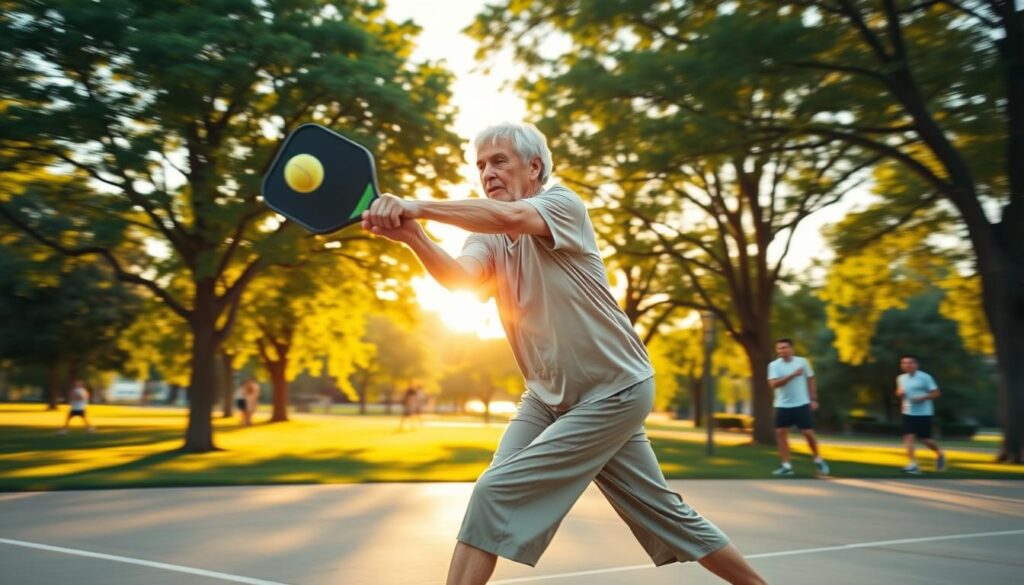
Translating golf swing concepts to paddle motion
Golf principles—load, sequence, and late release—map neatly to paddle mechanics. A small counter-shift and active backswing load elastic energy.
Practice the hip-to-chest drill: drive with legs, lift the chest, and keep the grip end moving toward the target through impact. That timing shifts peak speed to the right window.
“Measure intented fast swings with video or radar to turn feeling into facts.”
| Golf Concept | Pickleball Action | Outcome for Seniors |
|---|---|---|
| Load & sequence | Counter-shift + active backswing | More stored energy, safer mechanics |
| Late release | Patient transition to impact | Higher clubhead speed equivalent at contact |
| Upper body alignment | Upper body behind the ball position | Better balance and control under pressure |
Warm-up and mobility first: prepare the body to move fast, safely
Spend five purposeful minutes before any speed work to ready the joints and prime coordinated motion.
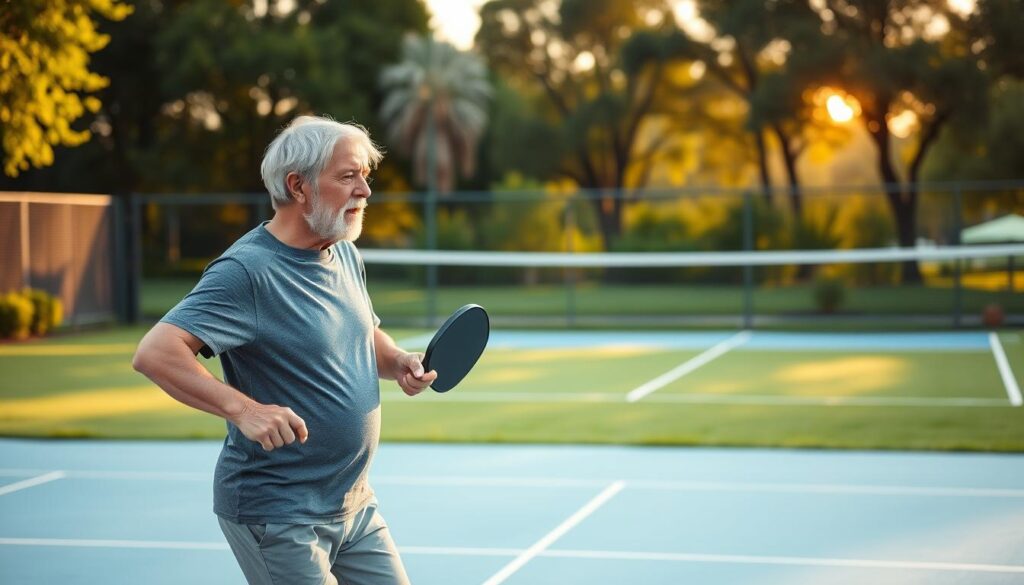
Use a dynamic routine inspired by golf training that emphasizes movement, not long holds. Start with controlled arm circles and hip hinges to open the thoracic spine and shoulders.
Five-minute dynamic warm-up inspired by golf speed training
Do each drill for about 30–45 seconds: arm circles, step-and-reach, and gentle spinal extension. This elevates temperature and lubricates joints without draining energy.
Joint-friendly activation for shoulders, hips, and spine extension
Add light muscle activation next: mini-band lateral steps, glute bridges, and scapular retractions. These exercises cue the key engines so the body times power better when you accelerate the paddle.
Keep intensity modest. Aim for smooth motion that feels easier, not tired. Finish with two easy swings while focusing on light hands and a long exhale to reduce tension.
“Five focused minutes of movement protects joints and makes faster swings feel more natural.”
Set up for speed: stance, posture, and tension-free hands
A simple, repeatable setup often adds measurable pace without extra strain.
Begin with a wide, athletic base that stabilizes your lower body. This stance lets the torso and head rotate freely and keeps balance when you accelerate.
Wide base and upper-body position
Stack posture so the upper body sits slightly behind the ball. That position helps the paddle follow a cleaner path and improves contact control.
Loose hands for a whippy release
Soften your hands and ease the forearm squeeze at address. A neutral-to-light grip unlocks a longer, smoother swing and adds club head speed without extra effort.
Balance and pressure control
- Check even foot pressure from mid-foot to heel to avoid tipping forward.
- Align head, shoulders, and hips so the paddle accelerates along a predictable path.
- Use a one-breath routine—inhale, exhale, swing—to steady arousal and preserve fine motor control as speed rises.
“Athletic, not careful at address”—a golf cue that encourages ready balance and better rhythm.
Backswing wind-up and patient transition: load, then unload
A controlled backswing creates elastic energy while protecting joints if the motion stays smooth. Build energy early with a subtle counter-shift and an active wind into the backswing. This gives the club more runway to produce club head speed without extra strain.
Counter-shift to start motion and build early energy
Begin by moving weight slightly to the trail side. That gentle counter-shift loads pressure into the trail foot and cues coordinated movement in the hips and torso.
Long hand path and torso-hip rotation for power
Extend the hand path a touch longer to create time to apply force. Rotate hips and torso together to tap the stretch-shortening cycle and add power without brute effort.
Patient transition timing to improve sequencing and impact speed
Pause the urge to rush at the top. A patient transition lets body segments unload in order so the clubhead accelerates just before the ball contact.
- Keep the head stable while winding to protect the path and timing.
- Let the club set naturally; forcing the club head wastes energy and harms mechanics.
- Practice small-range wind-ups first, then build toward fuller movement as joints allow.
“Load…then go” — a simple cue to control pressure and keep timing crisp.
From hip-high to chest-high: add speed where it matters
Train the small zone from hip to chest to harvest the most usable head speed for each shot. This brief window around impact is where proper timing creates ball exit and court depth without risky over-swinging.
Keep the grip end moving up and toward the target through impact
Drive the handle upward as you pass through impact. That upward motion prevents the clubhead from stalling and preserves head speed into the ball.
Handle up, chest up is a simple cue to stop early deceleration and keep the motion connected from hands to club.
Use lower body drive and spine extension for efficient head speed
Push with the legs and extend the spine to create power from large segments, not just the arms. This gives smoother clubhead speed and less stress on joints.
- Start slow; groove the sequence hip → chest → finish.
- Keep a light grip so the head stays elastic.
- Verify gains with a radar or timed reps; watch mph and consistency.
| Focus Zone | Primary Action | Immediate Benefit |
|---|---|---|
| Hip to chest | Drive hips, extend spine | More head speed at impact |
| Handle path | Up and toward target | Prevents clubhead stall |
| Grip tension | Light and neutral | Faster, more elastic swings |
Drills and practice progressions to increase swing speed
Practical practice progressions turn raw effort into usable on-court speed. Use a clear sequence so each drill builds confidence and control.
Hip-to-chest speed drill progression
Start with no-ball hip-to-chest reps. Focus on keeping the grip end moving up and toward the target.
Next, add soft-feed contacts. Finish with full-speed swings only when comfort and control are steady.
Tempo and rhythm routines
Use a metronome or count cadence to stop rushing under pressure. A stable tempo protects timing and consistency.
Practice sets of short, measured reps instead of long, tiring grind sessions.
On-court speed ladders and range sessions
Try a ladder: 5 reps at 60%, 5 at 75%, 5 at 90%, then 3 at 95%, logging mph after each block.
Allow 20–40 seconds rest between sets so power stays high and mechanics remain clean.
“Measure mph and use short, focused reps to keep quality over quantity.”
| Session | Action | Rest | Feedback |
|---|---|---|---|
| Warm-up reps | No-ball hip-to-chest | 15 sec | Video check for handle path |
| Speed ladder | 60→75→90→95% reps | 20–40 sec | Log mph |
| Contact focus | 2 accuracy shots per fast rep | 30 sec | Depth or target count |
| Contrast swings | 1–2 driver-like swings (if tolerated) | 60 sec | Return to on-court shapes |
Video and feedback loops: refine swing mechanics faster
A reliable video routine speeds learning more than extra practice hours. Use simple, repeatable filming to spot the exact timing, path, and position changes that add usable speed.
Camera angles, foldering “good speed” swings, and self-review
Film from front and side with a tripod or stable phone. These angles show rotation and the handle path through the hip-to-chest window.
Create a “good speed” folder on your phone. Save your fastest clean swings so you can copy a proven model when practice drifts.
Use slow-motion to inspect the key mechanics. Tag clips with short notes like tempo, handle up, or balance so patterns jump out during review.
When to bring in a coach for sequencing and path corrections
Self-review fixes many issues, but bring a coach when a problem repeats or progress stalls. A coach diagnoses sequencing faults and corrects the club path and set-up faster than trial-and-error.
“Video gives you data; a coach turns that data into a safer, faster plan.”
| Review Action | What to Watch | Benefit |
|---|---|---|
| Front & side video | Position and path | Clear visual of mechanics and tempo |
| Good-speed folder | Best swings for reference | Quick recalibration in practice |
| Coach session | Sequencing and pressure control | Targeted fixes, fewer bad habits |
Programming your speed training: frequency, volume, and recovery
1) Five variations of first sentence:
a. “A focused schedule beats random practice when the goal is safe, repeatable speed gains.”
b. “Short, intentional sessions build reliable head speed without stressing joints or time budgets.”
c. “Structure and recovery are the quiet engines behind sustainable increases in paddle velocity.”
d. “Planned exposures to speed work create steady progress and protect long-term consistency.”
e. “Quality over quantity wins: brief, targeted blocks raise mph more than marathon reps.”
Chosen: b. “Short, intentional sessions build reliable head speed without stressing joints or time budgets.”
Reason: It is concise, distinct from provided sentences, emphasizes short sessions and joint safety, and aligns with the brief calling for time-efficient programming for seniors.
2) Use current_section data: include H2 heading, brief intro, H3s for weekly routine and tracking mph, include bullets paraphrased, include driver-intent swings, radar tracking, rest windows, scheduling, warm-up routine, video review. Must include provided img centered with alt containing keyword related to section: likely “speed training”. Ensure no more than keyword repeats per density rule.
3) Brand voice: informational, neutral.
4) Use lists, quote, for nuance.
5) Final formatted HTML content within with H2, paragraphs, H3, lists, blockquote, table maybe. Table required? It’s allowed. But keep total words 150-200.
6) Keyword placement matrix after content. Count words approx 175. Max repeats per keyword = (TotalWords/100)*2 -> if 175 words -> 3.5 -> max 3 repeats each. Must ensure keyword frequencies accordingly. Keywords include “speed training” x3, “training” x2 etc. I’ll include them as required counts.
7) Short paragraphs, Flesch 60-70 – keep simple sentences, short.
8) Include centered — HTML can’t center with attributes; but instruction says center only. Use it placed in middle; cannot add align. But earlier sections used raw . We’ll place it between paragraphs.
Include quote.
Now produce final content and then keyword matrix and flesch indicator tags outside section? The developer demanded think and matrices included. The output must be enclosed section_9 tag; instruction said begin by analyzing in tag. So include think, keyword matrix, flesch tags, then section_9. I’ll include them before section tag as they required.
Senior vegan edge: fueling, recovery, and joint-friendly strength
Targeted plant-based fueling and pragmatic strength training protect joints while building usable power. Use nutrition and sensible exercise to support club head speed without chasing volume.
Plant-based protein, supplements, and recovery
Prioritize soy, beans, lentils, and high-protein grains to rebuild muscle after short speed sessions. Aim for a protein dose within two hours of training to help adaptation.
Consider creatine monohydrate if cleared by your doctor; it can boost low-velocity power for older athletes. Add algae-derived omega-3s, flax, or chia to support joint comfort and recovery.
Mobility and joint-friendly strength exercises
Focus on hips, glutes, and trunk rotation with low-impact moves. Goblet squats, hip hinges, and anti-rotation presses train the chain that creates clubhead speed.
- Use isometrics and slow eccentrics to build resilience without flaring joints.
- Keep one mobility day weekly to protect the thoracic spine and shoulders for fuller loading.
- Periodize strength and technique days so power gains and control improve together.
“Fuel, steady strength, and focused mobility let you chase usable speed while keeping the body healthy.”
| Focus | Action | Benefit |
|---|---|---|
| Protein | Soy, legumes post-session | Muscle repair |
| Strength | Hip & trunk exercises | More usable power |
| Recovery | Omega-3s & mobility day | Joint health, better control |
Conclusion
Finish with a clear, repeatable plan so practice gains turn into match-ready pace.
Anchor each session: warm up, load well, time the transition, and accelerate through the hip-to-chest window near impact. Use short, focused speed training blocks so power builds without overuse.
Record your best swings on video and save clips as reference. Track head speed and contact quality together so numbers match ball outcomes.
Calm pre-shot routines, measured tempo, and consistent fueling keep you performing under pressure and protect joints as power rises.
Small, steady steps beat chasing big jumps. Commit to one measurable improvement per week and let momentum add real speed over time.