Can a clear, evidence-based plan keep you playing strong and safe when temperatures spike?
Extreme heat is the leading weather-related killer in the U.S., and rising climate trends make dangerous events more common. For vegan pickleball players aged 50 and up, a practical plan links court performance to health and safety.
This guide aims to reduce exposure, protect cardiovascular health, and sharpen on-court decisions so people can keep playing without added risk. Older athletes process hydration, fueling, and recovery differently, and simple adjustments cut risk while preserving enjoyment.
We will cover risk context, vegan hydration and nutrition, sun protection and cooling tools, on-court tactics, community prep, and emergency recognition and response. Adopting proactive measures now builds resilience and supports long-term play.
Safety is a performance enhancer, not a constraint. With consistent cooling and smart pacing, you preserve agility and clear thinking in rallies. Each section gives steps you can use before, during, and after play to extend your game and protect your health in your local place and community.
Why Extreme Heat Demands a Game Plan for Older Adults
Rising summer temperatures are changing how older adults should plan their time on community courts.
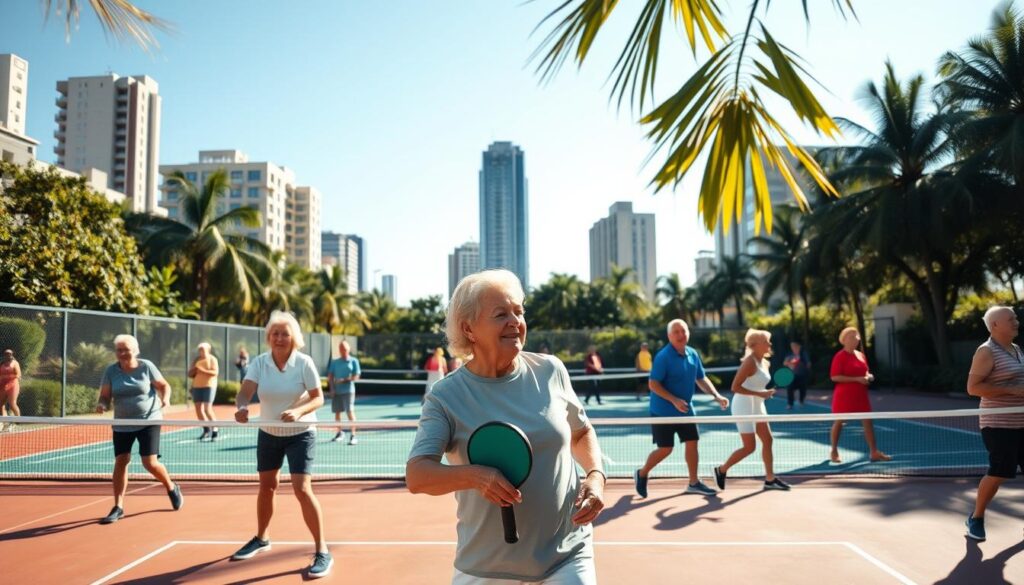
Heat is the deadliest weather threat in the U.S.—what that means for your health
Extreme heat raises cardiovascular and kidney strain. For adults over 50, even mild exertion can push heart rate and fluid loss higher.
Cumulative warm days raise baseline body temperature. That increases risk before you step on the court.
Understanding urban microclimates and higher-risk courts
Urban heat near courts is common. Hard surfaces, metal fences, and nearby asphalt trap radiant energy and boost surface temperatures.
- Expect courts to feel several degrees hotter than shaded parks nearby.
- Local systems can be strained: more electricity demand, outage risks, and fewer shaded seats.
- Mitigation (trees, cool pavements) lowers ambient warmth; management (cooling centers, alerts) protects people now.
Plan shorter games, longer rests, and bring water and cooling supplies. Check local advisories, and lean on government or club resources like canopies and visible heat-index displays when available.
Hydration and Vegan Nutrition: Preparing Your Body for Summer Heat
Caring for fluids and plant-based fuel keeps performance steady and lowers risk of heat illness. Start with a plan so your body stays balanced during play.
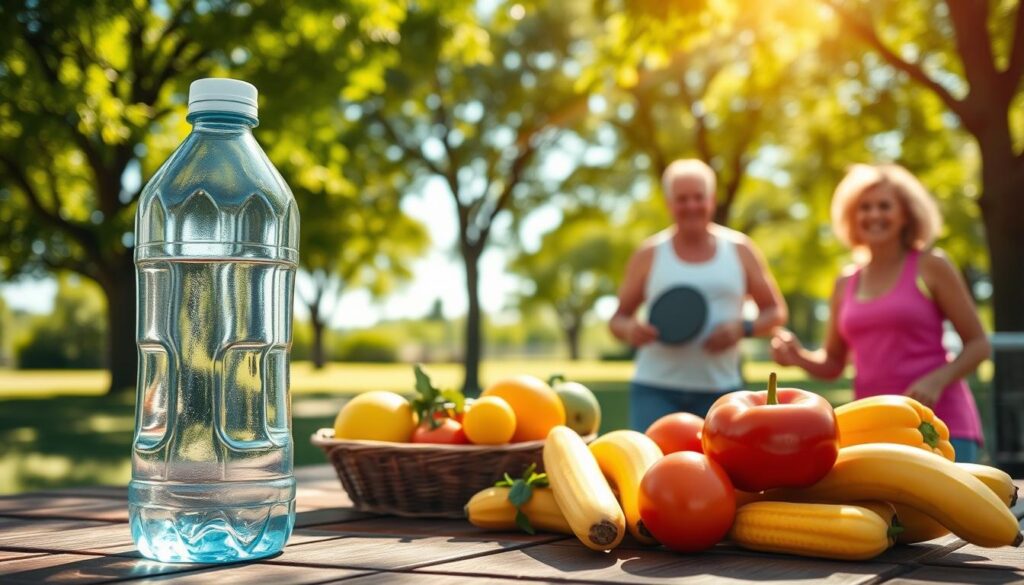
Pre-match hydration timelines and how much water to drink
Begin pre-hydrating 2–3 hours before play with 16–24 oz of water. Drink another 8–12 oz about 15 minutes before warm-up.
On-court, sip water every changeover. Make sure to increase intake when humidity limits sweat evaporation.
Electrolytes on a plant-based diet
Older adults should pair water with sodium and potassium to protect plasma volume and reduce dizziness.
- Vegan options: salted dates, pickled vegetables, miso broth, or coconut water plus a pinch of salt.
- Plant-based electrolyte tablets are convenient for long matches or extreme heat days.
- If you sweat heavily, add 300–600 mg sodium per hour and watch for cramps or lightheadedness.
Fueling before, during, and after play
1–2 hours pre-match choose low-fiber, moderate-carb options: banana with nut butter, white rice and tofu, or a simple oat-soy smoothie.
During play pick easy carbs like applesauce pouches, salted rice balls, or vegan sport gels with water to avoid bonking.
After play target 20–30 g plant protein (soy yogurt, tofu bowl, pea-protein shake) plus salty carbs to replace losses and aid recovery.
Limit excess caffeine or alcohol on match days; fans move air but won’t lower body temperature if ambient air exceeds body temperature. If you need more community resources, check club information or learn about cooling options at Coverage Sports.
Sun Protection and Cooling Gear That Work at Any Temperature
Smart sun protection and compact cooling tools keep play safe and comfortable for players over 50. This section lists practical gear and packing tips to manage court temperatures and maintain performance.
UPF layers and sun-safe clothing
Choose UPF 50+ long-sleeve shirts and leggings with mesh panels to create portable shade on skin while keeping mobility for conditioning drills.
Wear a wide-brim hat or a legionnaire cap to protect ears and neck. Light-colored fabrics reflect heat and lower perceived temperatures.
Quick-cooling tools for match breaks
Carry pre-chilled microfiber towels for the neck, wrists, and forehead. Insulated bottles with ice and small misting bottles help evaporative cooling when the air is dry.
“Fans alone won’t lower core body temperature if the outside air is hotter than your skin.”
Practical packing and on-court shade
Rotate gear: bring two hats and extra socks so dry fabric can restore evaporative cooling and improve safety during long rounds.
- Minimalist kit: UPF set, brimmed hat, sunscreen stick (SPF 30+), 2 liters water, electrolyte tabs, cooling towel, misting bottle, packable shade.
On sunny or high temperatures days, prioritize ice packs, cold towels, and a misting fan. On humid days, prioritize shade and chilled fluids over airflow alone. Make sure to reapply sunscreen every two hours and cover high-exposure zones like the nose bridge and scalp line.
On-Court outdoor heat strategy for Pickleball Days
Smart timing and clear break rules lower the chance of illness and preserve energy. Start with match times that avoid the warmest hours and add agreed rest windows.
Smart scheduling and shaded rotations
Play at dawn or after dusk when possible. For midday events, shorten games and rotate shaded positions so partners share cooler spots.
Read weather, humidity, and the heat index
Check the heat index, not just temperature, because humidity reduces sweat evaporation. If the index reaches dangerous ranges, move indoors or reschedule.
Pacing, heart-rate checks, and warning signs
Reduce high-intensity rallies and take extra time between points. Monitor pulse and perceived exertion. Stop if dizziness, chills without sweat, or rising body temperature appear.
Court-side safety kit and event prep
Standardize break steps: sip fluids every changeover, apply cold towels to neck and armpits, and mist exposed skin.
| Item | Qty | Purpose |
|---|---|---|
| Insulated water bottles | 2 (24–32 oz) | Hydration during play |
| Electrolyte mix & salty snacks | Single pack each | Replace sodium and potassium losses |
| Cooling towel / ice pack | 1–2 | Rapid skin cooling to lower body temperature |
| Portable shade & phone | 1 each | Protection and emergency contact / power |
- Agree to pause play if anyone shows early signs of heat illness.
- Bring backup shade and charge fans for events with limited amenities.
Home and Community Cooling: Access, Power, and Backup Plans
Preparing your house and knowing local cooling hubs prevents risky exposure on match days. Make small changes at home so you leave in a cool, stable space and can return to one.
Before you leave home
Pre-cool the home by running air conditioning early, closing blinds on sun-facing windows, and turning ceiling fans on only when occupied.
Install and maintain air conditioning and add insulation, weather-stripping, or reflective window film to lower indoor gain.
Finding local centers and support
Map nearby cooling centers and resilience hubs. Note hours, transit, and any access rules so you can get refuge quickly if systems fail.
“Energy-grid resilience matters: outages at peak demand make timely access to indoor cooling lifesaving.”
Power outage readiness
Keep backup power if medically necessary, store ice packs in the freezer, and stage a home-to-court kit by the door with a frozen bottle, electrolytes, and printed resources.
| Action | Why it matters | How to prepare |
|---|---|---|
| Pre-cool home | Reduces indoor temperature spike | Set AC early; close blinds |
| Improve efficiency | Lowers repeated cooling needs | Insulate, weather-strip, cool roof options |
| Backup power & check-ins | Maintains safety during outages | Generator/batteries; neighbor/family check plan |
- Create a safety check-in with family or a neighbor before and after matches.
- Adjust departure and match times for urban heat and stressed systems to reduce risk.
Recognize and Respond: Heat Cramps, Heat Exhaustion, and Heat Stroke
Recognizing early signs of exertion-related illness can save lives on the court.
How to spot symptoms fast—from cramps to dangerously high body temperature
Watch for cramps: painful spasms in legs, arms, or abdomen after exertion. Stop play, move to shade, sip water with a bit of salt, and gently stretch.
Heat exhaustion shows heavy sweating, weakness, nausea, headache, or dizziness. Check body temperature if possible and shift the person to shade and cooling immediately.
Heat stroke is a true emergency. Look for a body temperature above 103°F, hot dry skin, confusion, or unconsciousness. Call 911 without delay.
Immediate actions on the court: cooling steps and when to call 911
Follow these simple steps: stop activity, remove excess clothing, apply cold towels to neck, armpits, and groin, and sip cool water if the person is conscious and not vomiting.
“Active cooling can prevent rapid decline—cold-water immersion is ideal if available.”
| Condition | Key signs | Immediate action |
|---|---|---|
| Cramps | Painful muscle spasms | Stop, shade, water + sodium, stretch |
| Heat exhaustion | Heavy sweat, nausea, dizziness | Shade, cool towels, sip water, monitor |
| Heat stroke | Temp >103°F, altered mental state | Call 911, rapid cooling, emergency care |
High humidity and warm air reduce evaporation and raise illness risk. Prioritize older adults and children—err on the side of calling emergency services early.
After any event, rest and rehydrate for 24–48 hours and consult a clinician before returning to play. These steps protect player safety and help prevent recurrence.
Conclusion
Small, consistent steps let veterans enjoy rallies while protecting their health as climate patterns shift. With planning and decisive action, vegan pickleball players 50+ can adapt to extreme heat and keep playing through the summer.
Start this week: set hydration reminders, pack a shade kit, and schedule matches at the coolest times. Share local cooling center info with club mates and family so everyone has quick access to resources.
Make simple home fixes — blinds, added insulation, and efficient air conditioning — to cut indoor temperature spikes before and after play. Ask clubs to add water stations, shade, and visible thermometers so systems work for all.
Keep a ready kit: water and electrolytes, UPF apparel, cold towels, portable shade, a charged phone, and an agreed emergency plan. These small actions create large safety gains against extreme heat events and climate-driven heat waves.