Can a focused, court-ready routine help you move better, hit harder, and recover faster after age 50?
This how-to guide shows a precise 10–12 minute sequence that prepares joints, boosts balance, and primes quick reactions for safer play. It blends a pulse raiser, dynamic joint prep, movement footwork, power priming, and racquet integration tailored to a plant-forward lifestyle.
Expect clear steps for on-court use and brief nutrition ideas that link a whole-food, plant-based diet to lower inflammation and faster recovery. The guide also flags the “terrible toos” — too much, too soon — and offers simple tips to avoid overuse issues.
Science-backed principles emphasize dynamic mobility before play and a 10–15 minute cool-down after. The author provides practical advice that respects changes in connective tissue and neuromuscular control with age while keeping the focus on performance and confidence.
Why a targeted warm-up matters for pickleball athletes over 50
A short, precise routine primes the nervous system and joints so movement feels safer and sharper on court. It bridges the gap between sitting and quick, reactive play in a way that saves time and energy.
Reduce injury risk with dynamic, not static, moves
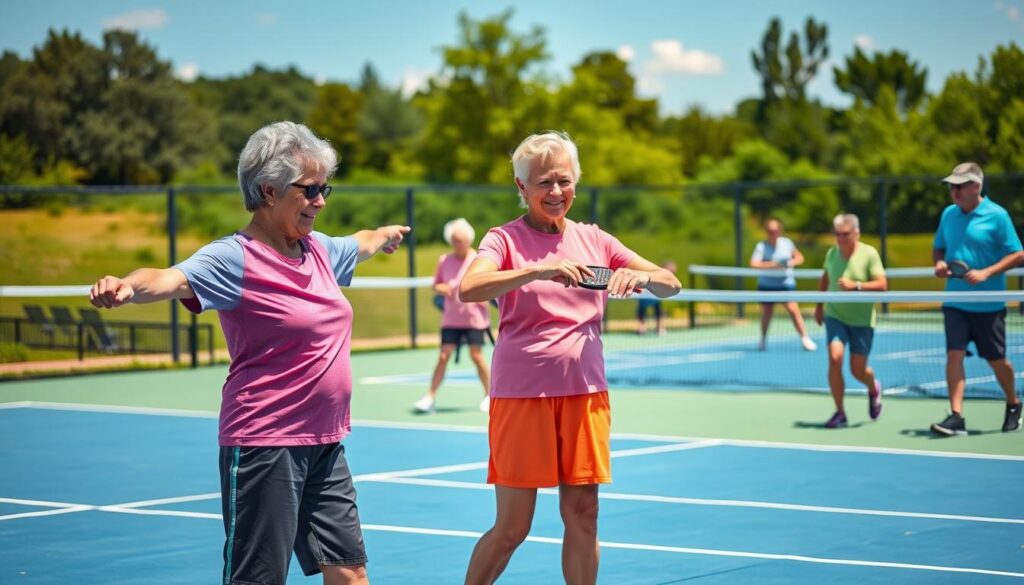
Dynamic moves—controlled swings, shuffles, and joint circles—wake the nervous system and increase synovial fluid in the joints. This improves first-step reactions and court readiness faster than long static holds.
Research shows that holding deep stretches before activity can lower power and quickness. Save static stretching for the cool-down to preserve peak performance during play.
The “terrible toos”: avoiding too much, too soon
With age, tendons stiffen and tissue hydrates more slowly. Doing too much, too soon raises the risk of flare-ups and setbacks.
- Progress frequency and court time by small weekly increments.
- Use cross-training—walking, light cycling, or bands—to keep aerobic fitness without excess joint load.
- Track perceived exertion and morning stiffness; scale back when signs appear.
| Area | Quick action | Why it helps |
|---|---|---|
| Dynamic mobility | 2–5 minutes of brisk drills | Speeds nerve firing and joint lubrication |
| Progression | 10% weekly volume increases | Reduces overuse and injury risk |
| Cross-training | 2–3 low-impact sessions/week | Maintains fitness while protecting joints |
Dynamic first, then static in the cool-down — a simple rule that aligns your routine with current best practices and protects the body while improving fitness and paddle control.
Step-by-step senior vegan warmup: a precise, court-ready flow
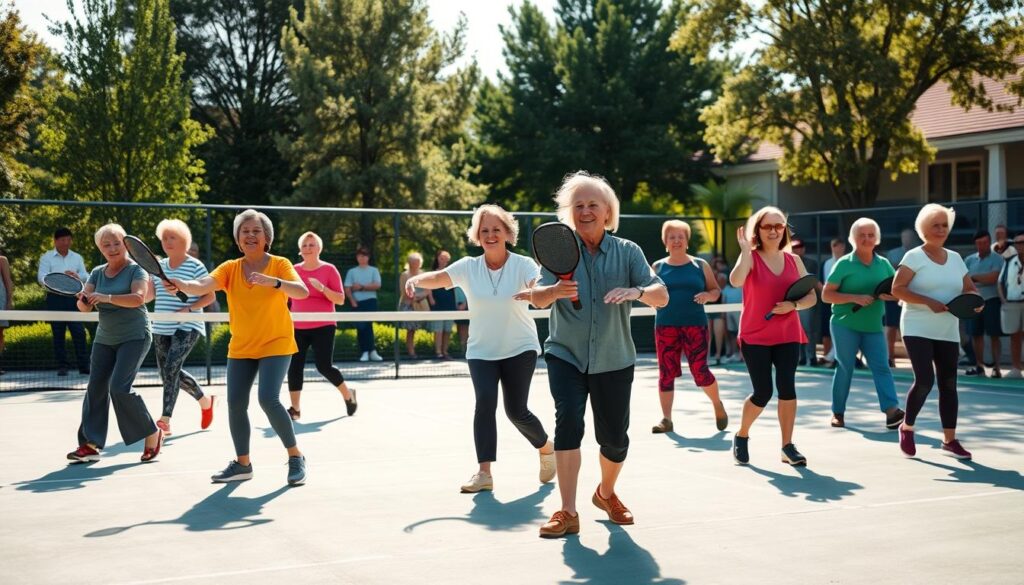
Start court-ready prep with a compact, practical flow that raises heart rate gently and primes quick feet.
Gentle pulse raiser: brisk walk or light jog in place
Begin with two minutes of brisk walking or light jogging in place. Add gentle arm swings to warm the body and raise circulation.
Dynamic joint prep: ankles, hips, shoulders, and spine
Do ankle pumps and circles, 10 each way per side. Then progress to hip controlled articular rotations and thoracic twists with shoulder rolls to lubricate joints for multi-direction movement.
Movement-specific drills
Two sets of side shuffles (10–12 yards each direction) and two sets of carioca for hip rotation. Add toe taps to a line and 3–4 crisp split-steps to prime reactive readiness.
Power priming: lattice lunges and mini band walks
Perform 4–6 lattice lunges per leg (forward, lateral, 45°) and mini band walks, 8–10 steps each way. These activate glutes and prepare muscle for deceleration and quick first steps.
Racquet integration and quick reactions
Shadow 8–10 dinks per side, 6–8 third-shot drops, and 6–8 compact volleys. Finish with 2 quick reaction drills (clap or color call) and 2–3 micro-shuffles.
Cue posture and breathing throughout—tall spine, ribs down, nasal inhale, relaxed exhale. Keep the full sequence within 10–12 minutes; if short on time, prioritize pulse raiser, joint prep, one lateral drill, and four shadow swings each side for efficient training and better recovery signaling for protein uptake.
| Drill | Reps / Distance | Purpose |
|---|---|---|
| Brisk walk / jog | 2 minutes | Raise heart rate, warm body |
| Joint circles & CARs | 10 each direction | Increase joint range and mobility |
| Side shuffles / carioca | 2 sets, 10–12 yds | Improve lateral speed and hip rotation |
| Lattice lunges / band walks | 4–6 per leg / 8–10 steps | Prime glutes and deceleration angles |
Fueling the plant-powered body: pre- and post-warmup nutrition
What you eat around practice directly affects reaction speed, muscle repair, and how quickly you bounce back. Anchor your routine to reliable micronutrients and sensible meal timing to keep energy steady and recovery efficient.
B12 after 50: daily supplementation strategy and fortified foods
Vitamin B12 supports nerve health and red blood cell formation. For most people under 65, aim for 50 mcg daily or 2,000 mcg weekly; after 65, consider 1,000 mcg daily to offset absorption changes.
Practical forms include sublingual easy-melt tablets or capsules. Take them earlier in the day to help steady energy before training.
Fortified options: unsweetened soy, almond, or oat milks and nutritional yeast sprinkled on meals.
Protein that supports muscle and recovery on a plant-based diet
Beans, lentils, tofu, tempeh, whole grains, and seeds provide quality protein when total intake is adequate. Meta-analyses show plant protein supports strength and lean mass comparable to animal protein.
Distribute protein across meals and snacks to maximize muscle repair. Pre-session ideas: half a banana with peanut butter, a small oats-and-flax packet, or soy yogurt with berries 30–60 minutes before play.
Anti-inflammatory trio: turmeric, black pepper, and ginger
Add 1/2–1 tsp turmeric with a pinch of black pepper and fresh ginger to smoothies, oatmeal, or sauces daily. This combo can help manage exercise-induced soreness and support consistent training.
“A whole-food, plant-forward pattern reduces chronic inflammation and helps you recover faster between sessions.”
- Post-session refuel: lentil-quinoa bowl, tofu scramble wrap, or soy-banana smoothie with ground flax.
- Hydration tip: add electrolytes in hot weather—coconut water or water with a pinch of salt and citrus.
- Keep protein at each meal to aid muscle protein synthesis and repair.
Strength, mobility, and brain-support add-ons for performance and longevity
Simple at-home strength and cognitive nutrition choices make fast footwork and clear decisions easier.
At-home resistance combats age-related decline. Two to three brief sessions per week with bands and bodyweight moves preserves muscle and joint integrity.
Try squats to a chair, standing rows, wall push-ups, hip bridges, and calf raises. These exercises build stronger hips and calves, which improve lateral stability and acceleration for split-steps and quick recoveries.
After resistance work, add mobility pairings like 90/90 hip rotations and thoracic open books. These keep range of motion needed for volleys and overheads without adding time to your routine.
Research shows plant proteins can support lean mass and strength comparably to animal sources. Aim to distribute protein across meals and include tofu, tempeh, beans, lentils, or seitan so training gains stick.
For brain support, eat dark leafy vegetables daily for lutein and 1/2–1 cup of berries for flavonoids. Add 1–2 tablespoons ground flaxseed or a small handful of walnuts for omega-3 ALA, or consider algae-based EPA/DHA if desired.
“Small strength sessions and targeted foods improve reaction speed, tracking, and decision-making on court.”
Micro-sessions of 5–8 minutes with bands on non-play days keep progress steady. Slowly progress band tension and emphasize controlled eccentrics to keep gains without joint strain.
These habits support overall health, reduce fall risk, and help you stay confident as training seasons change.
Recovery, resilience, and lifestyle: what to do after you play
How you spend the minutes after play shapes how you feel the rest of the day and the week.
Cool-down sequence: 10–15 minutes to pamper worked muscles
Spend 10–15 minutes on easy recovery. Start with 2 minutes of gentle walking to lower heart rate.
Then hold each stretch for about 30 seconds: calves, quads, hip flexors, hamstrings, glutes, chest, and forearms. Breathe deeply.
Use diaphragmatic breathing during each hold to nudge the nervous system toward rest and reduce residual muscle tone.
RICE for flare-ups: rest, ice, compression, elevation
For new aches in the first 72 hours, follow RICE. Rest the area, ice up to 20 minutes per session, compress snugly, and elevate when sitting or lying down.
Compression and elevation help move fluid and curb swelling—don’t skip these in the first 48–72 hours after a tweak.
Sleep hygiene for better energy and healing
Aim for consistent bed and wake times, morning light exposure, dim evening lights, and a bedroom around 18–21°C. Stop eating about three hours before bed and hydrate earlier in the evening to reduce nighttime disruptions.
Stress management to protect healthy aging
Try a short daily meditation of ~12 minutes to lower stress and support cellular resilience. The day after hard sessions, choose gentle exercise like walking or mobility work to keep the body moving without overload.
- Template cool-down sequence and breathing tips above.
- RICE steps for acute flare-ups.
- Practical sleep and diet timing tips to boost recovery.
These simple, repeatable tips help you recover faster and keep training consistent—so exercise and life stay aligned with your long-term health.
Budget-friendly vegan choices for everyday energy and court confidence
A few pantry staples can turn tight grocery budgets into steady energy for the whole week.
Focus on whole-foods that deliver protein, carbs, and micronutrients without added cost. Dry beans, lentils, rolled oats, brown rice, and bulk seeds stretch meals and pack calories into small servings.
Whole-food meals that fit the training week
Plan three simple meals that rotate through the week. Breakfast: cold-brew overnight oats with flax and peanut butter. Lunch: kale-and-white-bean burgers baked at 350°F, served with whole-wheat bread or salad.
Dinner: roasted tomato and white bean penne with fresh basil. These meals are prep-friendly and scale to match activity on match days.
B12 is available from fortified nondairy milks and nutritional yeast; a low-cost supplement can add convenience and consistency for daily intake.
Smart shopping: prioritize beans, lentils, oats, seeds, and vegetables
Build a weekly plan around low-cost staples. Buy dry or no-salt canned beans, lentils, frozen vegetables, seasonal produce, and store-brand grains.
- Batch cook: one pot of beans or lentils, a sheet pan of roasted vegetables, and portioned grains to save time.
- Label tips: choose unsweetened fortified nondairy milk and plain oats to control calories and sodium.
- Pack portable snacks: walnuts, fruit, or a homemade oat-flax bar to stabilize energy between matches.
Sticking to unprocessed staples keeps grocery bills lower than meat-centric or highly processed diets. Reserve specialty products for variety, not every meal, and keep a running list of favorite affordable meals to rotate through the week.
Conclusion
A brief daily ritual of movement and mindful eating builds durable fitness and steadier recovery across the years.
A short, precise warmup and 10–15 minutes of cool-down lower injury risk and sharpen reaction time. Pair this with a pragmatic plant-based diet that prioritizes whole foods, fiber, and adequate protein to support muscle and healthy weight.
Don’t skip B12 supplementation after age 50 and use simple anti-inflammatory foods—turmeric, black pepper, ginger—regularly to ease joint comfort. Track sleep, soreness, and calories to guide training and meal timing during busy weeks.
Choose one nutrition upgrade and one movement drill to start today. Share the routine with a partner, take half-step progressions in training, and enjoy better performance and health season after season.