Could a few simple habits extend your playing years and keep your feet pain-free?
Your feet are the foundation of every move on the court. They give balance, agility, and quick reactions that shape your performance in each game.
Pickleball involves short sprints and sharp direction changes that strain muscles and joints. Without attention, common issues like blisters, plantar fasciitis, or fungal infections can slow you down.
This guide lays out a simple approach for aging players who follow a plant-based lifestyle. You will find smart footwear tips, targeted warm-ups, on-court tweaks, and post-match recovery steps made for long-term play.
Small changes—switching shoes after play or adding a five-minute routine—help reduce risk and keep feet comfortable. Follow these practical, age-aware strategies to protect your foundation and enjoy more time on the court.
Why foot care matters for 50+ pickleball players
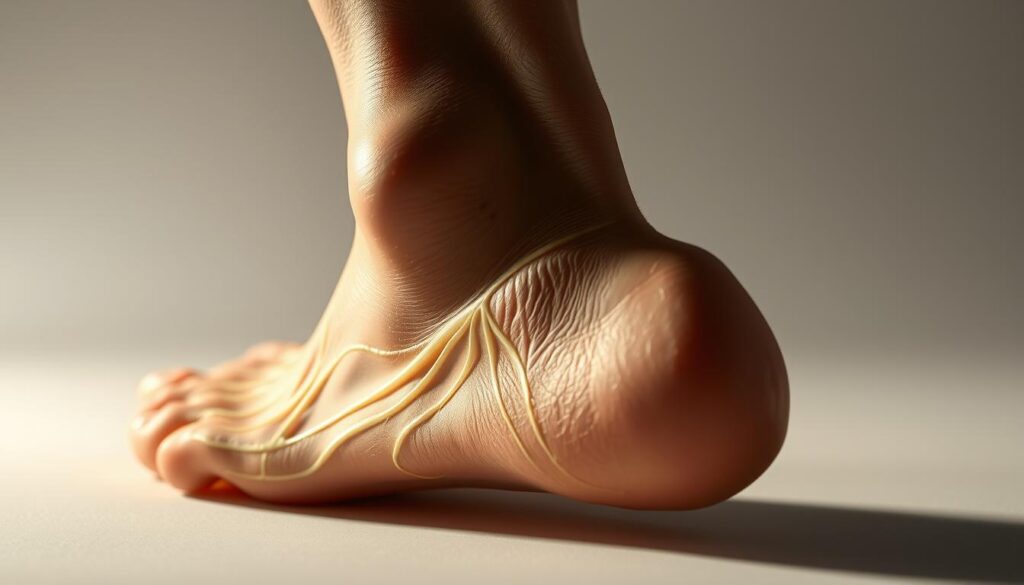
Short bursts of speed and abrupt stops concentrate force on the heel and arch. These movements load the plantar fascia and nearby tissues with each push-off. Over time, that repeated stress can cause microtrauma and lead to fasciitis or inflammation.
The court demands rapid lateral movements, starts, and stops. Quick pivots and shuffles add up, especially when calves and arches are tight. Restricted ankle dorsiflexion raises strain during those fast changes.
Age-related factors that raise risk
As players age, flexibility drops and recovery time grows. That makes the arch and heel more vulnerable during busy weeks of play. Even small gains in flexibility improve load distribution and lower injury risk.
- Short warm-ups spread across the week help keep tissues ready.
- Track court time and rest days so the plantar fascia can adapt.
- Address calf tightness to reduce overload on the arch and heel.
| Movement | Primary load | Prevention tip |
|---|---|---|
| Rapid lateral step | Arch and plantar fascia | Daily ankle mobility and short warm-ups |
| Quick start/stop | Heel and Achilles | Calf stretches and pacing on-court time |
| Pivots and shuffles | Microtrauma to plantar tissues | Regular rest days and low-impact cross-training |
Tip: Modest increases in flexibility reduce inflammation and help your feet absorb shock better, so you move with more balance and less pain over time.
Footwear and socks for stability, comfort, and court performance
Good gear starts before the warm-up and continues after the last point.
Pick dedicated court shoes with lateral support and sticky traction to improve stability and on-court performance. These shoes control side-to-side motion and lower the risk of slips during quick pivots.
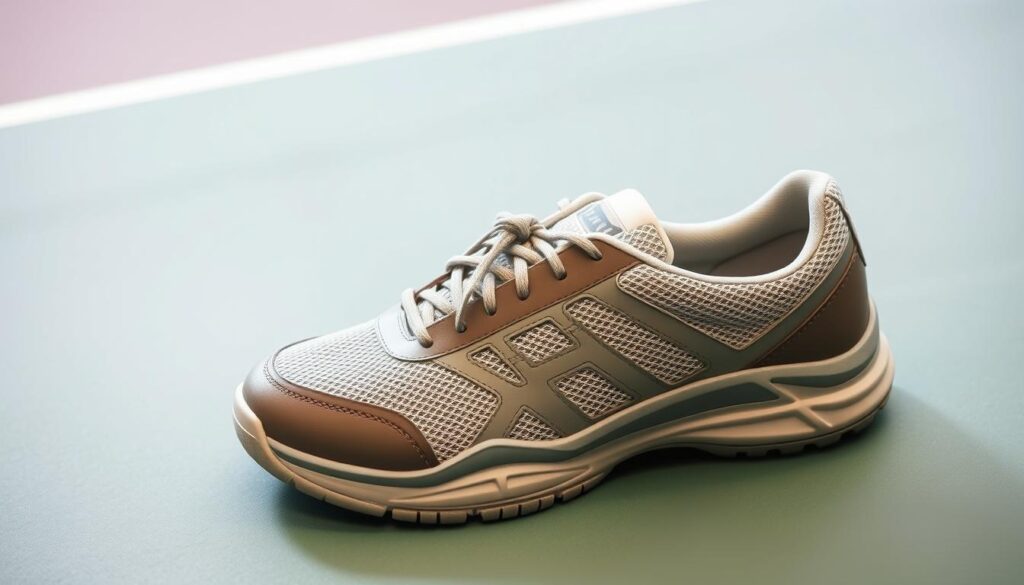
Court shoes vs. recovery shoes: when to switch and why
Wear court footwear only while playing and switch to soft recovery shoes right after a match. Changing immediately reduces pressure on the plantar fascia and helps circulation for tired feet.
Sock choices and moisture control to prevent athlete’s foot
Choose moisture-wicking socks and remove damp pairs as soon as possible. A roomy toe box prevents friction on toes and nails and lowers blister risk.
Arch support and orthotics for better alignment and reduced pain
Well-fitting shoes with proper arch support reduce excessive pronation and shear on the fascia. Inspect tread and midsole compression often—worn out soles raise impact forces and can cause issues like plantar fasciitis.
- Try custom or prefabricated orthotics for flat or high arches to improve alignment.
- Rotate two pairs of shoes so foam rebounds between sessions.
- Trim toenails straight across and moisturize heels daily to prevent cracking and pain.
Warm-up and mobility: exercises that prepare your feet to play
Start with simple motion drills to wake up ankles, calves, and the small muscles under the midfoot. A short routine takes little time but lowers risk of early-step pain and soreness.
Dynamic pre-court sequence for calves, Achilles, and arches
Five-minute sequence: Begin with ankle circles (30 seconds each side) to loosen joints. Follow with gentle calf raises, 10 slow reps, and three slow side shuffles across half a court to rehearse lateral movements.
Targeted stretches: plantar fascia, towel, and toe stretches
Perform a wall calf stretch for 30 seconds per leg to ease calves and Achilles. This improves flexibility and lowers strain on the arches when you sprint.
Sit and pull your toes back for a seated plantar fascia stretch, holding 30 seconds to prime the fascia and reduce first-step pain. Use a towel looped around the ball of the foot for 30 seconds per side to boost dorsiflexion.
Finish with toe curls and splay drills for 10–15 seconds per toe to activate intrinsic muscles. Practice a few split-step and shuffle repetitions to link the warm-up to actual court movements.
“Rhythmic, controlled motion beats aggressive holds—adjust depth and time based on morning stiffness.”
Quick cool-down: Mirror the sequence after play for a short time to protect tissue and preserve gains.
Managing plantar fasciitis for pickleball players
Managing heel pain starts with practical steps you can use before, during, and after play. Plantar fasciitis is inflammation of the plantar fascia and it often shows as sharp morning or first-step pain. A focused routine lowers flare risk and helps you stay active.
Before you play: footwear checks, taping, and gentle activation
Inspect shoes and footwear for worn midsoles or uneven tread. Confirm arch support and fit; replace any pair that compresses or slips.
Apply Kinesio taping along the arch to unload the fascia. Then do gentle activation—calf raises, toe scrunches, and ankle pumps—for three to five minutes.
During the game: modify movements, choose doubles, pace intensity
Prefer doubles to limit running and cut deep lunges. Take smaller steps and avoid sudden, explosive moves that spike load on the fascia.
If pain grows, pause and ice for 15–20 minutes on the sidelines. Reassess before continuing; short rallies and controlled positioning help manage symptoms.
After the match: cool-down stretches and immediate care
Do calf, towel, and plantar fascia stretches for about 30 seconds each. Roll the arch lightly with a ball to ease tissue tone.
Switch into soft recovery shoes, elevate when seated, and consider OTC options per your health plan. Track flare patterns and seek professional treatment if pain persists; options include orthotics, physical therapy, injections, and ESWT.
Post-game recovery to reduce inflammation and foot pain
A brief, consistent cooldown helps cut swelling and resets tired muscles quickly. Use a simple plan after each match to protect tissues and shorten downtime.
Rest, ice, compression, elevation
Rest by avoiding heavy weight-bearing for a short period. Ice the sore area for 15–20 minutes to help reduce inflammation.
Use an elastic bandage for light compression and elevate the limb above heart level to boost circulation and limit swelling.
Epsom soaks, massage tools, and pain signals
Dissolve 1 cup of Epsom salt in warm water and soak for 15–20 minutes to relax tight calves and relax the plantar fascia.
Roll arches and heels with a ball or roller for several minutes to improve circulation and ease stiffness.
“Simple, repeatable steps after play keep minor soreness from becoming a season-ending problem.”
- Switch into cushioned recovery shoes as you leave the court to offload tissues.
- Watch for hot spots, blisters, or swelling and treat small injuries early.
- If pain or fasciitis signs persist beyond a few days, seek professional assessment to rule out stress fractures or other injuries.
vegan pickleball 50+ foot care
Smart meal timing and steady fluids help you feel stronger on the court and bounce back faster.
Anti-inflammatory vegan nutrients and hydration to support recovery
Focus on anti-inflammatory patterns that include omega-3s from algae oil, flax, and chia. Add polyphenol-rich berries and leafy greens to lower inflammation and ease post-match pain.
Aim for steady hydration all day and sip during play. In hot conditions, add electrolytes to maintain muscle function and optimize performance.
Healthy weight, timing of meals, and electrolyte balance for performance
Even modest weight loss reduces load on the plantar fascia and lowers force with each step. Mindful portions and fiber-forward meals help maintain energy without extra pounds.
Eat a small carb-plus-protein snack 60–90 minutes before play. Have a recovery meal within two hours after a match to support tissue repair and recovery.
- Include magnesium-, potassium-, and calcium-rich foods: beans, bananas, tofu, and fortified plant milks.
- Monitor iron and B12 and use supplements if needed to keep stamina high for playing pickleball.
- Carry water to the court and set daily hydration goals so recovery processes aren’t compromised by fluid gaps.
Technique and playstyle adjustments to protect your feet
Small, deliberate changes in how you move can cut strain and extend your playing time.
Use split-steps and shorter strides to stay balanced. This reduces hard braking forces on the arches and lowers discomfort during each game.
Favor doubles and tactical placement over power. Shorter rallies and smarter court coverage cut repeated sprints and sharp lunges that cause injuries for aging players.
- Prepare early with compact swings so you arrive on the ball with better posture and stability.
- Modify serves and returns for accuracy and depth rather than repeated jumps to limit peak loads that spark pain.
- Wear grippy, lateral-supportive shoes and check traction before play to prevent slips that jar the feet.
- Use short between-point routines—shake calves and roll arches briefly—to keep tissues warm and responsive.
- Communicate with your partner to share coverage and avoid last-second lunges that compromise control.
| Adjustment | Benefit | When to use |
|---|---|---|
| Split-step & short strides | Improved balance; lower braking forces | Every rally start |
| Doubles & tactical play | Less running; fewer sharp lunges | When recovering or managing pain |
| Compact swings & accurate serves | Better stability and consistent performance | Long matches or tight scheduling |
Conclusion
Conclusion
Consistent small actions add up to longer seasons and fewer interruptions from injuries. Use a brief warm-up before each game and pick supportive footwear to sustain performance on court.
After play, follow simple recovery steps: RICE (rest, ice 15–20 minutes, compression, elevation), Epsom soaks, and gentle stretches for calves and the arch. Rotate shoes and change damp socks to lower risk of blisters and fungal problems.
Plantar fasciitis is load-related—reduce peak forces with orthotics, taping, and measured play. Address foot pain early and seek professional evaluation if symptoms persist; options include physical therapy and advanced treatments.
Make this approach routine: prepare, protect, and recover. Small habits—shoe rotation, daily stretches, steady hydration, and anti-inflammatory foods—help you enjoy more confident movement and better long-term performance.